Ankle Boots That Look Good With Jeans: The Complete Style Guide
Few outfit formulas are as dependable as jeans and ankle boots. They work for school runs, office days, and dinner out, all without much effort. But not every boot flatters every jean cut, and getting the proportions wrong can throw off an otherwise great outfit.
This guide breaks down which ankle boot styles pair best with each type of jeans, how to handle hems and cuffs, and which colors and fabrics work well together. You’ll also see where boot trends are heading this season, plus a few real styling mistakes worth avoiding. By the end, you’ll know exactly which boots belong with which jeans, and why.
Why Ankle Boots and Jeans Are Such a Reliable Pair
Ankle boots sit at the perfect height. They’re low enough to move freely in, but tall enough to add structure to a casual outfit. Jeans do the same job on top: they’re relaxed, but they still look put together.
Together, the two pieces bridge almost any dress code. Add a blazer and they read as smart-casual. Swap in a graphic tee and they’re weekend-ready. This flexibility is exactly why the combination keeps showing up on runways and street style alike, season after season.
Boots also solve a practical problem jeans create. Denim needs a shoe with some structure to keep the leg line clean, and sneakers or flats don’t always add enough polish. An ankle boot fills that gap, quite literally.

The Ankle Boot Styles Worth Knowing About Right Now
Not all ankle boots are built the same, and each style suits a different jean and a different mood. Here’s a rundown of the shapes worth having in your closet, based on where this year’s footwear trends are heading.
Chelsea Boots for an Effortless, Polished Look
Chelsea boots are the elastic-sided, laceless style that slips on in seconds. They’re popular because they work with nearly everything, from tailored trousers to straight-leg jeans, without ever looking try-hard.
They suit readers who want one low-maintenance boot that covers most occasions. If you prefer a bit more visual interest or texture, a lug-sole boot might suit you better.
Chunky Lug-Sole Boots for Off-Duty Edge
These boots have a thick, grooved sole and a slightly heavier build. They add attitude to soft, relaxed outfits like wide-leg jeans and oversized knitwear.
They’re a great fit for anyone who spends a lot of time on their feet, since the sole gives real cushioning. If you want something sleeker for dressier days, a pointed-toe boot is the better call.
Pointed-Toe Boots for a Leg-Lengthening Line
A sharp, pointed toe stretches the line of the leg and instantly looks more polished than a round toe. It’s a favorite for anyone who wants their jeans and boots to look a little more elevated without adding height.
This style suits readers who wear a lot of straight-leg or cropped-flare denim. It’s less forgiving with wide-leg jeans, where the boot tends to disappear from view anyway.
Western-Inspired Boots for Statement Style
Stacked heels, subtle stitching, and a slightly pointed toe give western boots their signature look. They’re having a real comeback this year, particularly in neutral leather rather than the bolder prints of past seasons.
They work best for readers who like their outfit to have one clear focal point. If you’d rather keep the whole look understated, stick with a Chelsea or block-heel boot instead.
Block-Heel and Platform Boots for All-Day Comfort
A wider, sturdier heel gives extra height without the balance issues of a thin stiletto. These boots are ideal for readers who want a dressier silhouette but still need to walk, stand, or commute comfortably all day.
They pair particularly well with straight and wide-leg jeans. Skip them if you’re after a sleek, close-to-the-leg finish, since the added heel width can look bulky with skinny denim.
| Boot Style | Overall Vibe | Best Jean Match | Typical Heel Height |
|---|---|---|---|
| Chelsea boots | Polished, minimal | Straight-leg, slim | Flat to low block heel |
| Chunky lug-sole boots | Off-duty, relaxed | Wide-leg, mom, cropped | Flat platform |
| Pointed-toe boots | Sleek, elongating | Straight-leg, cropped flare | Low to mid heel |
| Western boots | Bold, statement | Straight-leg, bootcut | Stacked block heel |
| Block-heel / platform boots | Comfortable, sturdy | Wide-leg, straight | Chunky low-to-mid heel |
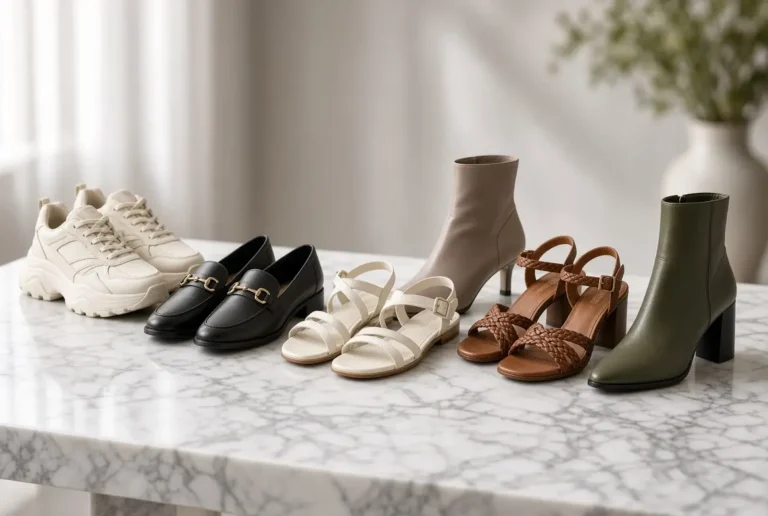
If you’re building out a wider rotation, it’s worth looking beyond boots too — our roundup of shoe styles worth adding to your wardrobe covers the other essentials that round things out.

Matching Ankle Boots to Your Jean Silhouette
This is where most outfits go right or wrong. The width and length of your jeans decide how the boot should meet the hem, more than the boot style itself does. Getting familiar with your denim’s fit family — Levi’s has a helpful jean fit guide that breaks down common silhouettes — makes this whole process easier.
Skinny and Slim-Leg Jeans
Skinny jeans are the easiest to pair with boots because the fabric is narrow enough to tuck in cleanly. Tuck the hem inside the boot shaft so the leg line stays smooth from knee to toe.
This works especially well with Chelsea boots or sock-style boots, where the boot’s shape blends right into the jean. It’s a strong choice for anyone who wants a streamlined, no-fuss silhouette.
Straight-Leg Jeans
Straight-leg jeans are the most versatile option for boots. Let the hem sit right at the top of the boot, grazing it lightly rather than covering it completely.
This creates a clean break between denim and leather without any bunching. It’s a safe, flattering pairing for almost any boot style on this list.
Wide-Leg and Mom Jeans
With wide-leg or mom jeans, let the denim fall naturally over the boot. The wider opening hides most of the boot shaft, so only the toe and heel peek out as you walk.
Chunky lug-sole and block-heel boots suit this pairing best, since a delicate boot can get lost under all that fabric. For more on this denim shape specifically, see how to style wide-leg jeans.
Cropped and Ankle-Length Jeans
Cropped jeans are meant to show a little boot. Aim for about an inch of visible boot above the ankle bone, which keeps the proportions balanced rather than choppy.
Pointed-toe and Chelsea boots both work nicely here, since their sleeker shape doesn’t compete with the shorter hem.
Bootcut and Flare Jeans
Bootcut jeans were originally designed with this exact pairing in mind. Let the hem skim the front of the boot so the flare covers the shaft without dragging on the ground.
A slimmer, more modern bootcut looks fresher than a heavily flared version, and it keeps the boot visible enough to still register as part of the outfit.
| Jean Style | Boot Approach | Why It Works |
|---|---|---|
| Skinny / slim | Tuck jeans into the boot | Keeps the leg line smooth, no bunching |
| Straight-leg | Let the hem graze the boot’s top | Clean break without hiding the shoe |
| Wide-leg / mom | Let jeans fall over the boot | Wide opening hides the shaft naturally |
| Cropped / ankle-length | Show about an inch of boot | Keeps proportions balanced, not choppy |
| Bootcut / flare | Hem skims the boot’s front | Matches the style’s original design purpose |
Style Tip If you only own one pair of jeans to wear with boots, make it a straight-leg style. It works with almost every boot shape on this list without any cuffing, rolling, or tucking required.
Getting the Proportions Right: Tucking, Cuffing, and Hems
Beyond matching the right jean to the right boot, a few small adjustments make a big difference. Cuffing the hem once or twice creates a neat, intentional break above the boot, which works well with straight and slim jeans that run a little long.
Rolling the denim under, rather than folding it over, gives a softer, more casual finish. This suits relaxed outfits where you don’t want a sharp, structured cuff.
Whatever method you choose, watch the gap between hem and boot. Keep it under two inches. Any wider, and the outfit can start to look like you’re wearing cropped pants with boots by accident, rather than on purpose.
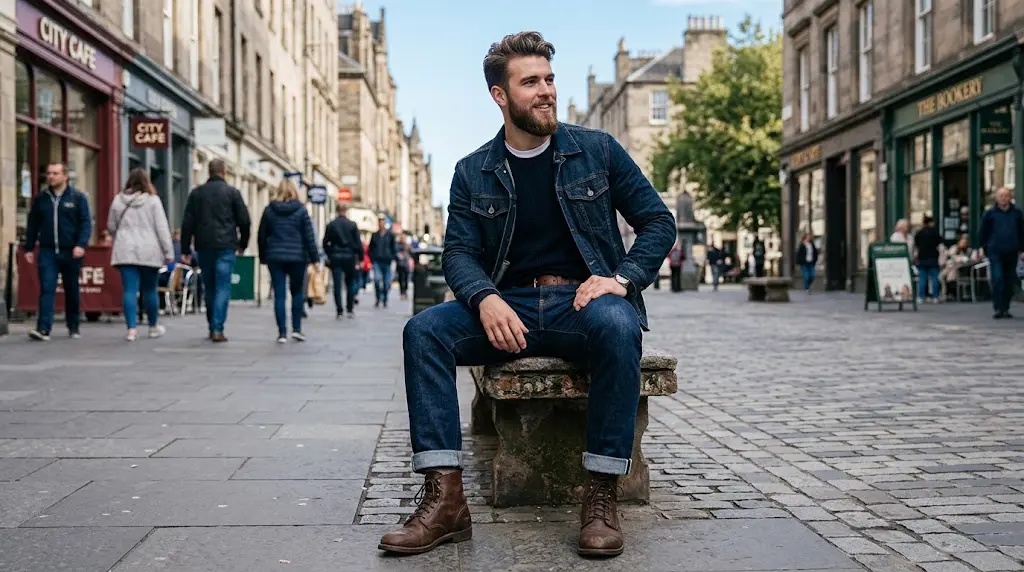
Style Tip Keep the gap between your jean hem and the top of your boot under two inches. Any wider, and the proportions start to look accidental instead of styled.
Colors and Fabrics That Always Work Together
Denim and leather are naturally a good match, but a few pairings look more finished than others. Dark or black denim tends to make boots look more polished, since there’s less contrast breaking up the leg line. Lighter washes read more casual and pair well with flatter, everyday boot styles.
Black boots go with almost every denim wash without much thought. Cognac and chocolate brown boots add warmth and work particularly well with mid-blue or washed denim. Deep burgundy or oxblood boots are having a moment this season and offer a richer alternative to basic black, especially paired with cream, camel, or navy tops.
On fabric, smooth leather looks sharper and more office-appropriate, while suede feels softer and more casual. Suede also shows wear and water marks more easily, so it’s worth saving for drier months or treating with a protective spray beforehand.
Building Full Outfits With Ankle Boots and Jeans
Once you’ve matched your boot to your jeans, the rest of the outfit should support that pairing rather than compete with it.
Casual, everyday looks:
- Straight-leg jeans, a plain tee, an oversized cardigan, and Chelsea boots
- Wide-leg jeans, a chunky knit sweater, and lug-sole boots
- Cropped jeans, a denim jacket, and pointed-toe flat boots
Smart-casual and office-ready looks:
- Straight-leg jeans, a tucked-in blouse, a blazer, and block-heel boots
- Slim jeans, a fitted turtleneck, a tailored coat, and Chelsea boots
Evening and date-night looks:
- Dark skinny jeans tucked into pointed-toe heeled boots, paired with a silk camisole
- Straight-leg black jeans, a structured leather jacket, and western-inspired boots
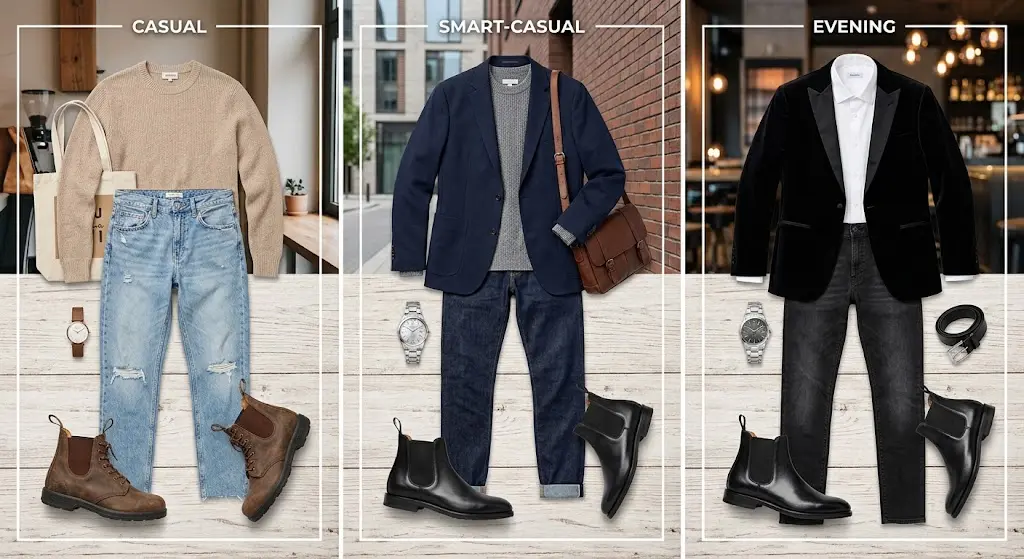
Style Tip For a fast smart-casual outfit, tuck a plain white tee into straight-leg jeans, add a blazer, and finish with block-heel Chelsea boots. It takes five minutes and works for lunch meetings or dinner out.
Accessories That Pull the Outfit Together
A few well-chosen accessories can lift a simple jeans-and-boots outfit without overcomplicating it. A structured bag adds polish to a casual base — our look at this season’s handbag trends is a good place to start if you’re shopping for one.
A belt at the waist helps define the silhouette, especially with wide-leg or mom jeans. Simple jewelry, like a single pendant or stud earrings, keeps the focus on the boots rather than competing with them.
Common Mistakes to Avoid When Pairing Boots With Jeans
- Leaving too big a gap between the jean hem and the boot, which shortens the leg line
- Wearing bulky, heavily flared bootcut jeans, which can look dated rather than intentional
- Choosing a boot that’s too delicate for wide-leg denim, so it disappears completely
- Matching busy, textured boots with equally busy, distressed denim
- Skipping insoles or proper sizing, which affects both comfort and how the boot sits against the hem
Budget-Friendly vs. Premium Ankle Boots
Both budget and premium boots have a place in a practical wardrobe. The right choice depends on how often you’ll wear them and how long you want them to last.
| Feature | Budget-Friendly | Premium |
|---|---|---|
| Price range | $40–$90 | $150–$400+ |
| Material | Faux leather or leather blend | Full-grain leather or suede |
| Sole | Synthetic, lighter wear | Leather or rubber, more durable |
| Longevity | One to two seasons with care | Several years with proper care |
| Best for | Trying a new trend, backup pair | Everyday rotation, long-term investment |
Buying one well-made pair rather than several cheaper ones is often the more sustainable choice too, since it means fewer pairs ending up in landfill after a season or two of wear.
Caring for Your Ankle Boots So They Last
Leather boots need a little upkeep to stay in good shape, especially once they’re getting regular wear against denim hems. A soft brush and conditioner every few weeks keeps the leather from drying out and cracking.
Suede benefits from a protective spray before its first wear and a suede brush to lift dirt afterward. If you want a full routine, our guide on keeping leather boots looking new walks through cleaning, storage, and weatherproofing step by step.
Building a Versatile Boot Wardrobe
If you’re narrowing down which boots to invest in first, think in terms of versatility rather than trend. A black Chelsea boot and a brown block-heel boot will cover the widest range of jeans and occasions between them.
From there, add a statement style, like a western boot, once your basics are covered. This approach fits naturally into building a capsule wardrobe, where every piece needs to earn its place by working with several others.
Frequently Asked Questions
Can I wear ankle boots with skinny jeans? Yes, and it’s one of the easiest combinations to get right. Tuck the jean hem into the boot shaft for a smooth, streamlined leg line.
Do ankle boots make you look shorter? Low-shaft boots can shorten the leg on shorter frames, especially with wide-leg jeans that add extra bulk. Pointed-toe boots and matching your boot color closer to your jean wash both help create a longer line.
Are ankle boots still in style this year? Yes. Chelsea boots, chunky lug-sole styles, and pointed-toe boots are all showing up heavily in current fall collections, alongside a strong return for western-inspired styles.
Should jeans go inside or outside my ankle boots? It depends on the cut. Skinny and slim jeans usually go inside the boot. Straight, wide-leg, and bootcut jeans generally look better falling outside, with the hem resting at or just over the top of the boot.
Can you wear ankle boots with jeans in warmer weather? Yes, especially with cropped or ankle-length jeans and a lighter leather or suede boot worn without socks. They work well for cooler mornings and evenings during transitional seasons.
What color ankle boot goes with the most pairs of jeans? Black and cognac brown are the two most versatile options. Both work across light, medium, and dark denim washes without needing to coordinate the rest of the outfit around them.
Final Thoughts
Getting ankle boots and jeans right comes down to a few repeatable rules: match the boot shape to your jean’s width, mind the gap at the hem, and choose colors that complement rather than clash. Once you’ve got a couple of reliable boot-and-jean pairings sorted, everything else in your wardrobe tends to fall into place around them.
From here, it’s worth thinking about how boots fit into your wider rotation of everyday pieces, and where a well-chosen accessory or layer can take a simple outfit further.