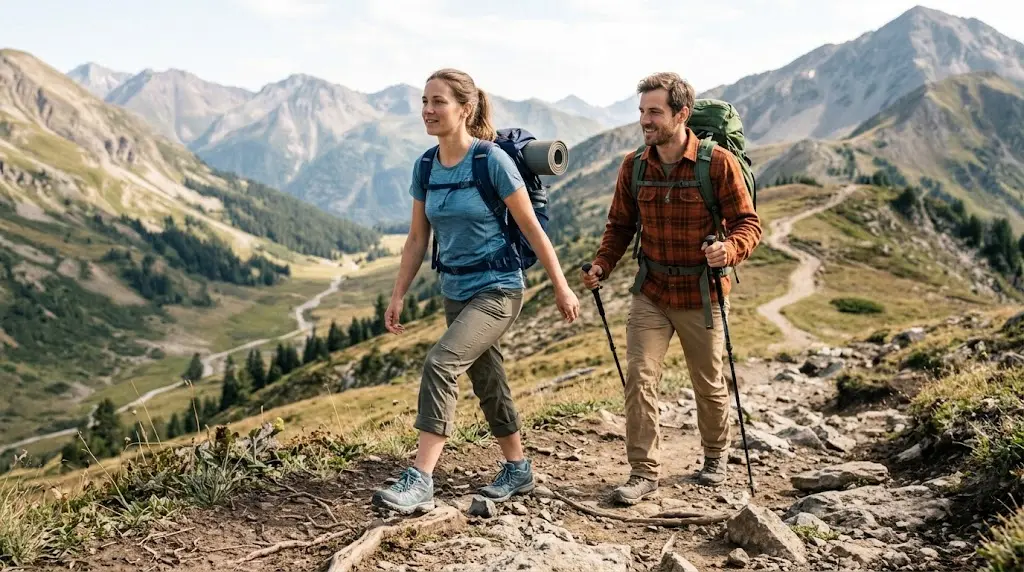
Best Hiking Shoes for Comfort, Grip, and Long Trails
A great pair of hiking shoes can make or break a trail day. The right pair carries you over rocky switchbacks, muddy creek crossings, and long uphill climbs without leaving your feet sore or blistered. The wrong pair turns a beautiful hike into an uncomfortable slog.
This guide breaks down what actually matters when you shop for hiking shoes: comfort, grip, support, and durability. You’ll learn the real differences between trail shoes, hiking boots, and backpacking boots, how to read an outsole for traction, and when waterproofing helps — or hurts — your feet. We’ll also cover budget and premium options, common buying mistakes, and how hiking shoes have quietly become one of the season’s most versatile fashion pieces. By the end, you’ll know exactly what to look for, whatever trail you’re planning next.
Why Your Hiking Shoes Matter More Than Almost Any Other Gear
Your feet do more work than any other part of your body on a hike. Every step on uneven ground tests your balance, your joints, and your patience. A shoe that fits poorly or grips weakly can turn a short walk into blisters, rolled ankles, or sore knees by mile three.
Good hiking shoes solve three problems at once. They cushion your feet against hours of repeated impact. They grip loose rock, mud, and roots so you don’t slip mid-stride. And they support your ankle and arch so your whole leg stays properly aligned, hike after hike.
Think of hiking shoes as an investment in every trail you haven’t hiked yet. The right pair disappears on your feet, letting you focus on the view instead of your blisters. The wrong pair is the only thing you’ll remember about the hike.
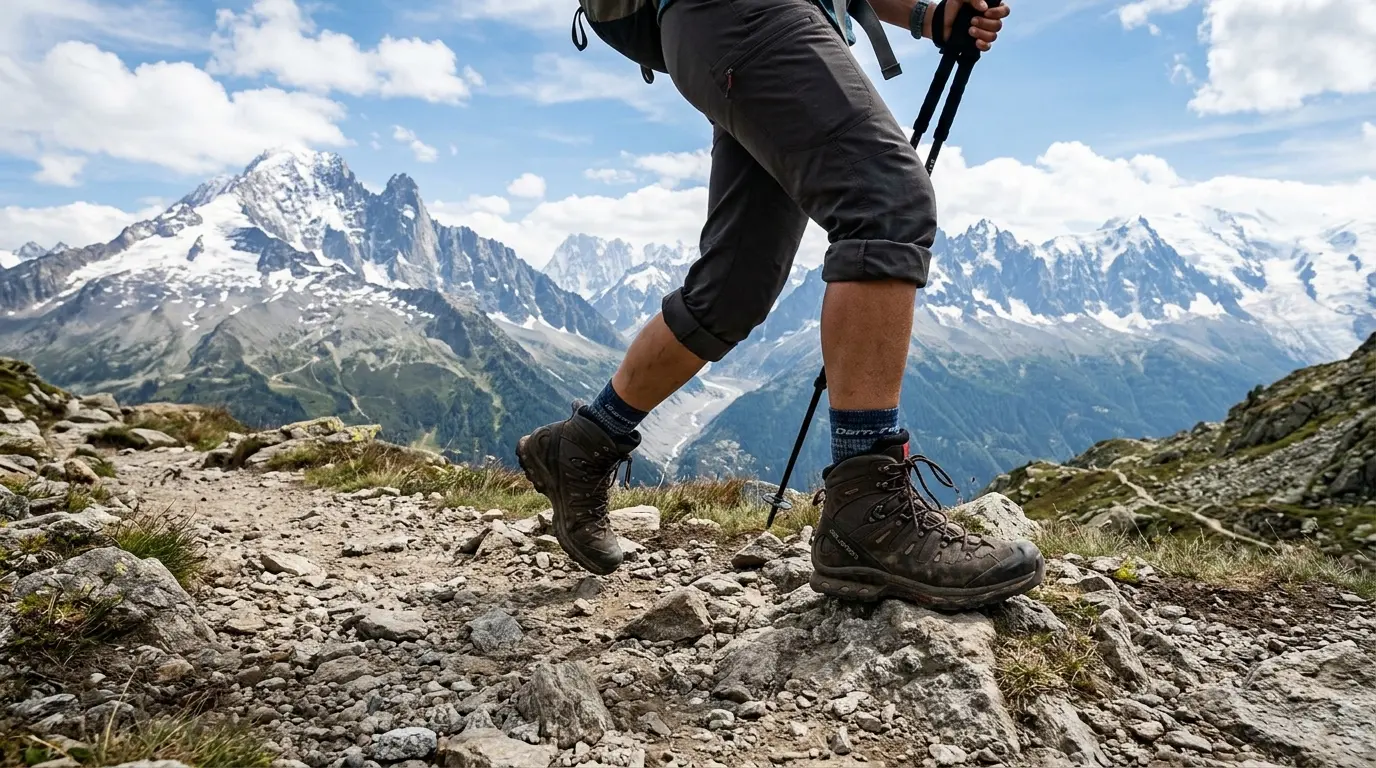
Trail Shoes, Hiking Boots, or Backpacking Boots: What’s the Real Difference
Not every hike calls for the same shoe. Trail shoes, hiking boots, and backpacking boots handle different terrain, weight, and distance, and picking the wrong category is one of the most common buying mistakes.
Trail shoes look and feel like beefed-up sneakers. They’re light, flexible, and great for day hikes on maintained paths where you don’t need much ankle support. Hiking boots sit higher on the ankle and offer more stability for uneven ground or a loaded daypack, which makes them the safest all-around choice for most weekend hikers.
Backpacking boots are the heavy-duty option. They’re built for multi-day trips with a full pack on your back, with stiffer soles that protect your feet from sharp rocks over dozens of miles. They’re overkill for a casual afternoon hike, but they’re the right call if you’re carrying serious weight over rugged terrain.
As REI’s footwear experts note, matching your shoe to your terrain and hike length matters more than picking the priciest option on the shelf (REI Expert Advice: How to Choose Hiking Boots and Hiking Shoes).
| Shoe Type | Best For | Weight | Ankle Support | Typical Terrain |
|---|---|---|---|---|
| Trail Shoes | Day hikes, fast pace | Lightest | Low | Maintained trails |
| Hiking Boots | Day hikes with a pack, uneven trails | Medium | Medium to High | Rocky, moderate terrain |
| Backpacking Boots | Multi-day trips, heavy loads | Heaviest | High | Rugged, remote terrain |
What Real Comfort Feels Like on the Trail
Comfort isn’t just soft padding. It’s a shoe that matches the actual shape of your foot.
Look for a roomy toe box. Your toes should wiggle freely, especially on downhill sections where feet naturally slide forward. A snug heel matters just as much — it stops the friction that causes blisters after a few miles.
Midsole cushioning affects how tired your feet feel after mile ten. Firmer midsoles protect against sharp rocks and hold up better over long distances. Softer midsoles feel plusher out of the box but tend to compress and wear out faster.
Arch support is easy to overlook until it’s missing. If you have flat feet or high arches, look for a shoe with a removable insole so you can swap in a supportive aftermarket one if needed.
Most hiking shoes need a short break-in period. Wear them around the house or on a few short walks before a big hike. This softens stiff materials and shows you exactly where they might pinch, long before it matters on the trail.
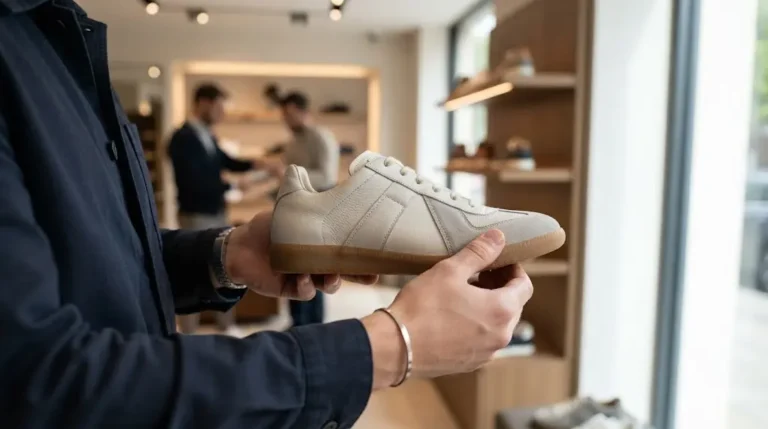
Style Tip Try on hiking shoes in the afternoon, when your feet are naturally a little swollen. This gives you a truer sense of fit than shopping first thing in the morning.
Grip and Traction: How to Read an Outsole Before You Buy
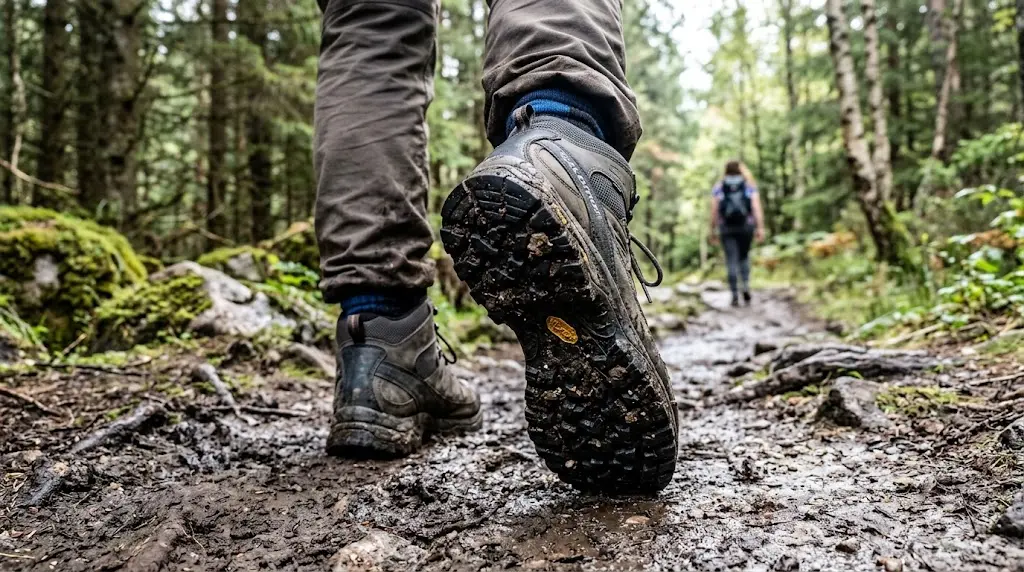
The outsole is where comfort meets safety. Deep, widely spaced lugs grip mud and loose dirt well. Shallower, closer-set lugs work better on smooth rock and hard-packed trails, where deep lugs would only add unnecessary weight.
Rubber compound matters just as much as the lug pattern. Softer rubber compounds grip better but wear down faster. Many premium hiking shoes use branded rubber compounds, like Vibram’s Megagrip, which is engineered specifically to hold traction on both wet and dry terrain (Vibram Megagrip Technology).
If you hike near water crossings or in rainy climates, prioritize grip over almost everything else. A cushioned shoe with a weak outsole is a fall waiting to happen, no matter how comfortable it feels standing still in the store.
Waterproof or Breathable? Solving the Trail Shoe Trade-off
Waterproof membranes keep your feet dry in rain, mud, and shallow creek crossings. They also trap heat, which can make your feet sweat more on warm days than a breathable shoe would.
Breathable mesh shoes let air flow freely, keeping your feet cooler on hot days. The trade-off is that they get wet fast in rain or stream crossings, and they take longer to dry out afterward.
There’s no universal right answer here. Your climate and the season you hike in most should decide it for you, not marketing on the shoebox.
| Feature | Waterproof Shoes | Breathable Mesh Shoes |
|---|---|---|
| Best Season | Spring, fall, wet climates | Summer, dry climates |
| Airflow | Limited | Excellent |
| Dry Time After Soaking | Slow | Fast |
| Ideal Hiker | Frequent rain or mud | Hot-weather, dry-trail hikers |
Style Tip If you hike in a mixed climate, keep two pairs on rotation — one waterproof, one breathable — instead of expecting a single shoe to handle every season well.
Matching Hiking Shoes to Your Foot Type and Hiking Style
Trail runners suit hikers who move fast and light, especially on well-marked paths. If you already love the fit of running shoes, a trail runner will feel familiar, just tougher underfoot. Our guide to choosing quality sneakers digs deeper into finding a shoe that actually matches your foot shape, which applies just as much to trail footwear as it does to everyday sneakers.
Mid-cut hiking boots suit hikers who carry a daypack, walk on uneven terrain, or simply want more ankle stability. If you’ve rolled an ankle before, the extra support is almost always worth the added weight.
Hikers with wide feet or high arches often need brands that offer multiple width options, rather than sizing up a half size and leaving extra room everywhere else in the shoe. A pair of quality hiking socks and, if needed, an aftermarket insole can also solve a lot of minor fit issues without buying a whole new pair.
If you find yourself hiking mostly on flat, groomed paths, a lightweight trail shoe will likely serve you better than a stiff boot — save the boots for the days you’re genuinely off the beaten path.
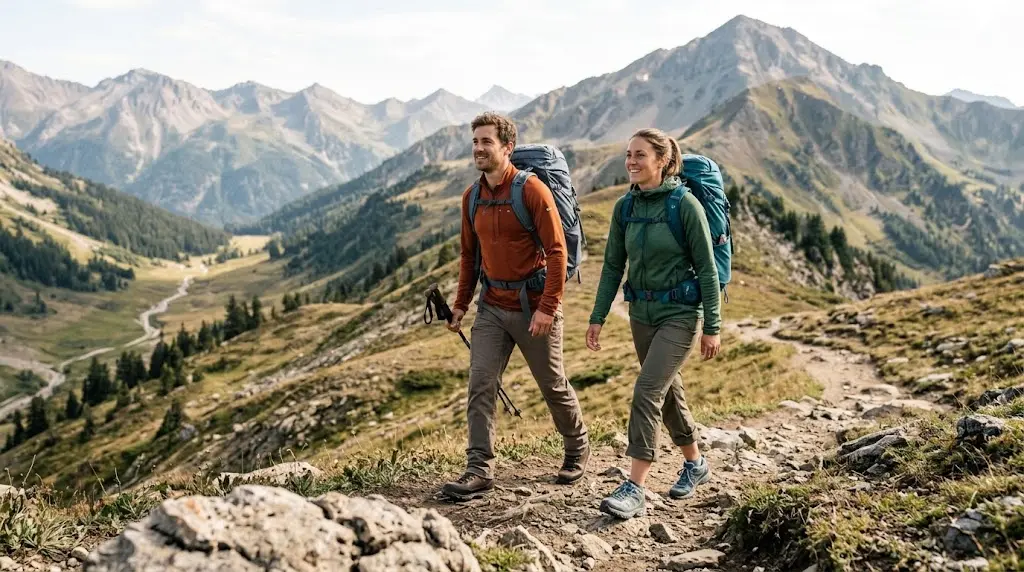
Budget-Friendly vs. Premium Hiking Shoes: What You’re Actually Paying For
A higher price tag doesn’t automatically mean a better hike. It usually means better materials, more durable outsoles, and construction that holds up over hundreds of miles rather than dozens.
Budget hiking shoes are a smart choice for occasional hikers or beginners who are still figuring out what fit and style they prefer. There’s no reason to spend top dollar before you know what you actually need. Premium pairs make more sense for frequent hikers who put serious mileage on their shoes every year, where durability pays for itself over time.
| Budget Hiking Shoes | Premium Hiking Shoes | |
|---|---|---|
| Price Range | Lower | Higher |
| Outsole Durability | Moderate | Long-lasting |
| Best For | Occasional hikers | Frequent, long-distance hikers |
| Break-In Time | Shorter | Sometimes longer |
| Repair or Resole Options | Limited | Often available |
Style Tip Resole-friendly boots cost more upfront but can be repaired instead of replaced, which often saves money — and reduces waste — over several years of regular hiking.
Common Mistakes Hikers Make When Buying Shoes
Even experienced hikers fall into these traps:
- Buying your regular shoe size instead of trying shoes on with the hiking socks you’ll actually wear
- Choosing style over support, especially for boots meant for rugged, uneven terrain
- Skipping the break-in period before a long or high-stakes hike
- Assuming waterproof always means better, even in hot, dry climates where it can backfire
- Judging a shoe by cushioning alone and ignoring the outsole entirely
- Waiting to replace shoes until they visibly fall apart, instead of when the tread wears smooth
Styling Hiking Shoes Beyond the Trail
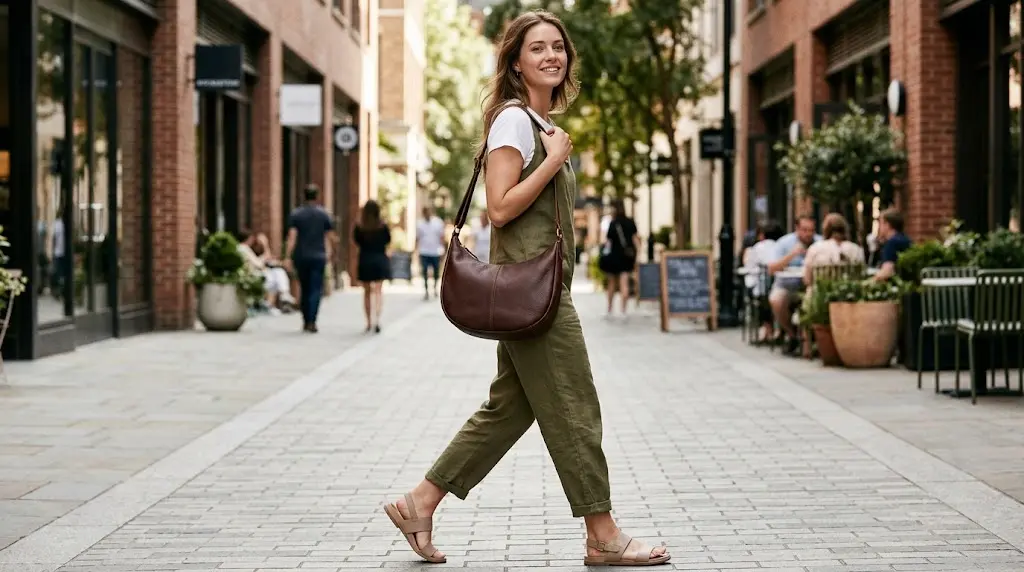
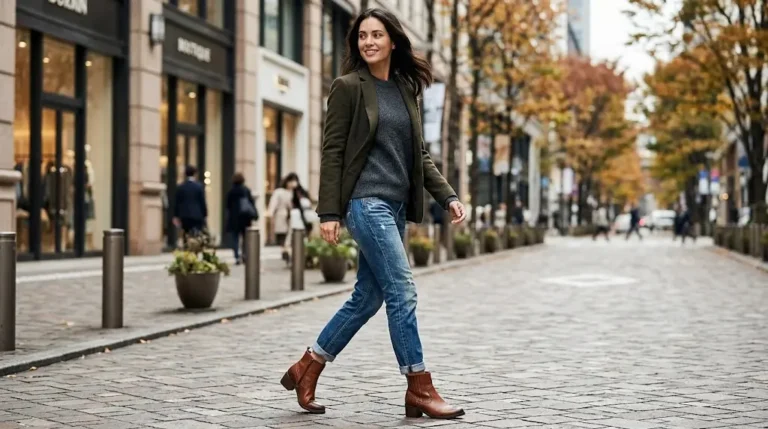
Hiking shoes have quietly moved off the trail and into everyday wardrobes. The rugged, outdoor-inspired look pairs naturally with cargo pants, relaxed denim, and technical outerwear.
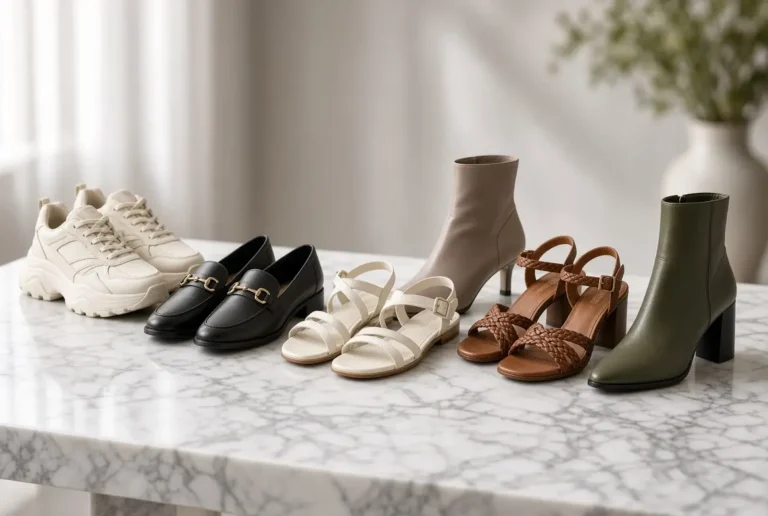
For an easy everyday outfit, try chunky trail shoes with straight-leg jeans and a cropped jacket. The contrast between rugged shoes and cleaner tailoring feels intentional rather than accidental. If you want more ideas for building looks around statement footwear, our roundup of shoe styles worth adding to your wardrobe and our everyday outfit inspiration guide are great places to start.
This crossover isn’t a passing moment, either. It’s part of a broader shift toward function-driven fashion that we cover in more depth in our footwear trends guide.
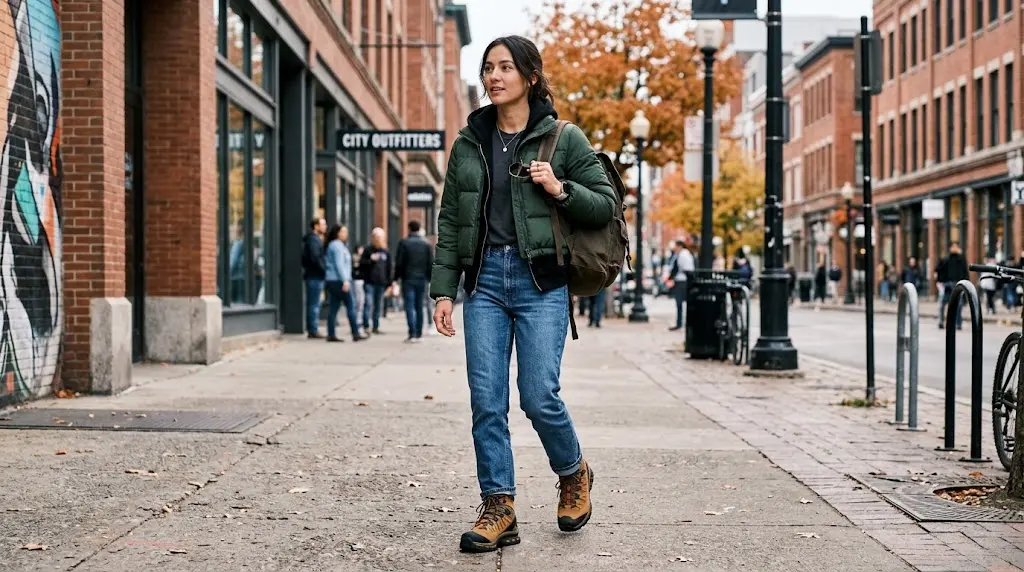
Style Tip Stick to one “rugged” element per outfit. Pair statement hiking shoes with simple, streamlined pieces so the look stays polished instead of overwhelming.
Caring for Your Hiking Shoes So They Last Longer
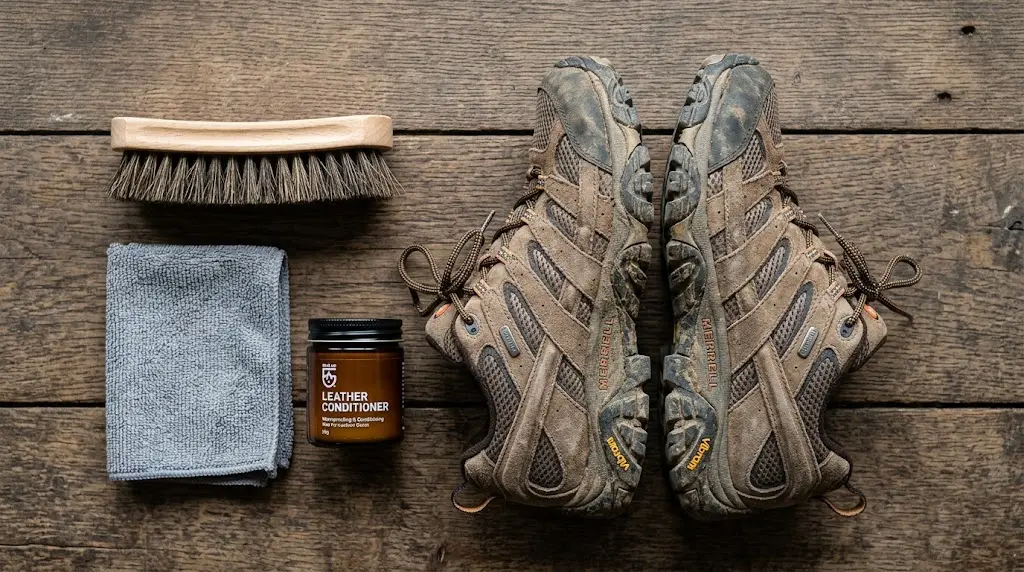
Rinse mud off with water and a soft brush after every hike. Built-up dirt breaks down both fabric and rubber faster than most people expect.
Let shoes air dry away from direct heat sources like radiators or campfires, which can crack materials and warp the shape. Stuffing them loosely with newspaper speeds up drying without damaging the structure.
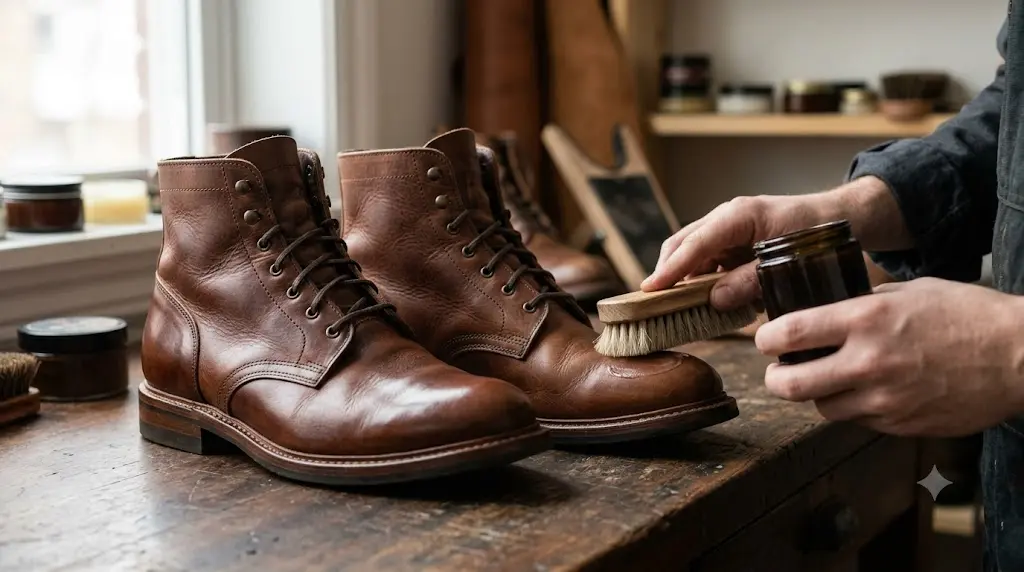
Leather panels need occasional conditioning to stay flexible and resist cracking. If your pair has leather details, our guide on how to keep leather boots looking new covers the exact steps for cleaning and conditioning leather without damaging it.
Frequently Asked Questions
How do I know if my hiking shoes fit correctly? Your toes shouldn’t touch the front, even on downhill terrain. Leave about a thumb’s width of space at the toe, and make sure your heel doesn’t slip when you walk.
Are trail running shoes good enough for day hikes? Yes, for most maintained trails. They’re lighter and often more comfortable straight out of the box, though they offer less ankle support than boots on rougher terrain.
Do I need waterproof shoes if I hike in a dry climate? Not usually. Breathable mesh shoes keep your feet cooler and still dry quickly if you get caught in an unexpected shower.
How often should I replace my hiking shoes? Watch the outsole, not the calendar. Once the lugs wear smooth or you notice less grip on familiar trails, it’s time for a new pair.
Can I wear hiking shoes as part of a regular outfit? Definitely. Pair them with straight-leg jeans, joggers, or utility pants for a look that feels current without trying too hard.
What socks work best with hiking shoes? Merino wool or synthetic hiking socks work best. They wick moisture and reduce friction far better than plain cotton socks, which stay damp and cause blisters.
Final Thoughts
Finding the right hiking shoe comes down to matching the shoe to your feet, your trail, and your climate, not chasing the flashiest pair on the shelf. Prioritize fit and grip first. Everything else, from waterproofing to price, depends on how and where you actually hike.
If you’re building a versatile shoe collection, from trail-ready pairs to everyday sneakers, take a look at our guide to choosing quality sneakers next. And if rugged, function-first style caught your attention here, our footwear trends roundup breaks down where outdoor-inspired fashion is headed next.
Your feet carry you through every trail memory you’ll make. A little extra care in choosing your shoes pays off with every step.





19 Responses
uTgp
UtGP()(.”‘(,.(
uTgp’reTzEc)nMnziZ
uTgp
uTgp
uTgp
uTgp
uTgp
uTgp
uTgp
uTgp
uTgp
uTgp
uTgp
uTgp
uTgp
uTgp
uTgp
Тут портале можно отыскать нужную информацию.
https://telegra.ph/Sem-zapovedej-Rick-Owens-filosofiya-zakodirovannaya-v-chernoe-03-04