A Buyer’s Guide to Choosing Quality Sneakers
Sneakers have quietly become one of the most important purchases in a modern wardrobe. They carry us through commutes, workouts, weekend errands, and increasingly, the office — which means a poor choice doesn’t just look wrong, it wears out fast and costs more in the long run. This guide breaks down what actually separates a well-made sneaker from a forgettable one, from the materials in the upper to the flex of the sole.
You’ll learn how to read construction quality the way a stylist or shoe buyer would, how to match a sneaker to your lifestyle instead of the other way around, and how to get the fit, styling, and care right once you’ve made your choice. By the end, shopping for sneakers should feel less like guesswork and more like an informed decision you can repeat with confidence.
Why Sneaker Quality Matters More Than Ever
Sneaker prices have climbed steadily over the past several years, and so has the range of what’s available at any given price point. That combination makes quality harder to judge just by looking at a price tag — a $150 sneaker isn’t automatically better built than a $70 one, and a designer logo doesn’t guarantee superior construction either.
Understanding quality on your own terms protects your budget and your feet. A well-constructed sneaker holds its shape, resists creasing prematurely, and remains comfortable well past the first few wears. A poorly constructed one tends to break down at the toe box, lose cushioning within months, or separate at the sole — problems that are frustrating to notice only after you’ve already worn them out in public.
Understanding How Sneakers Are Built
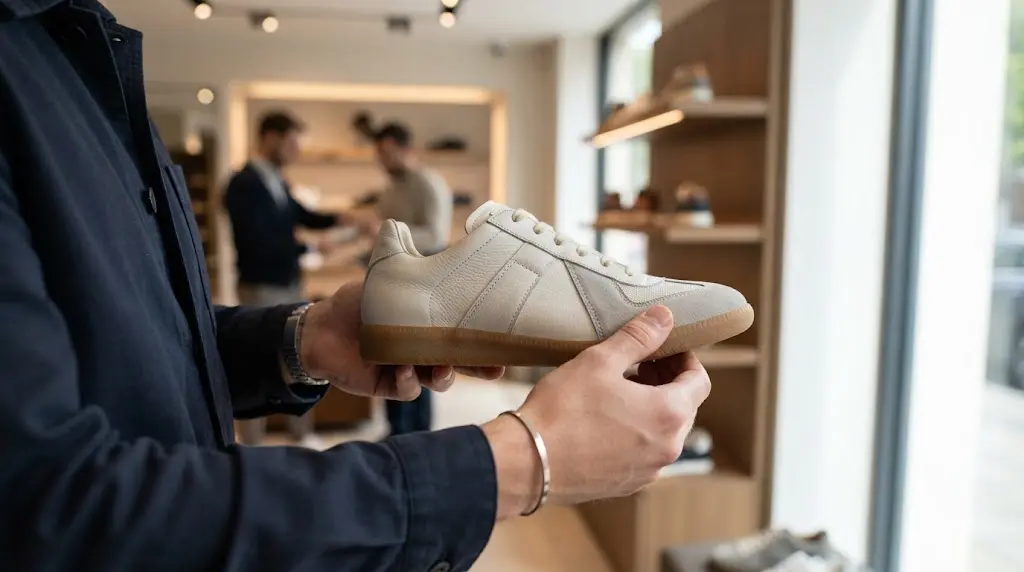
Every sneaker is made of three core components, and knowing what each one does makes it much easier to evaluate a pair before buying.
The Upper: Material Choices and What They Mean
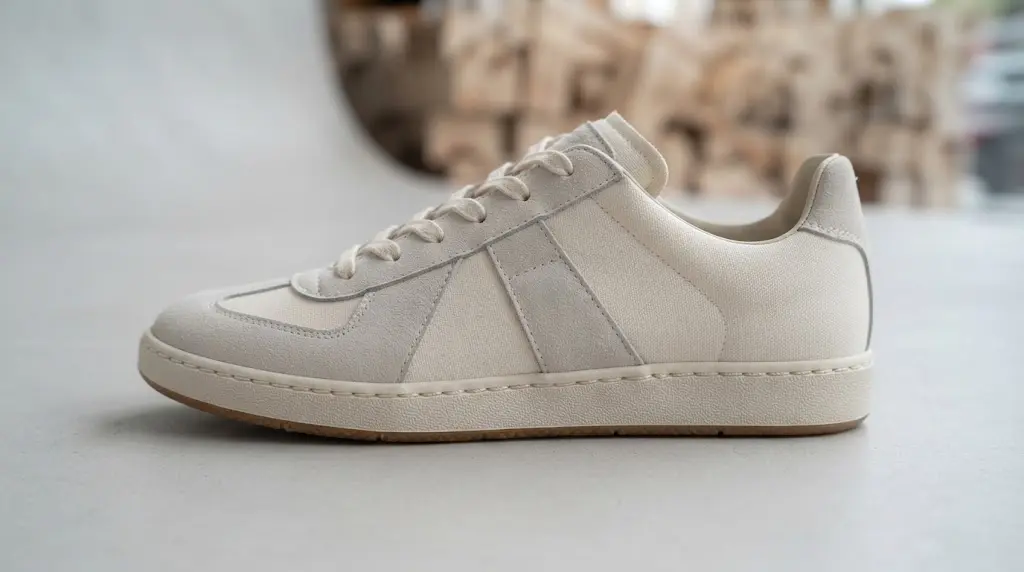
The upper is everything covering the top and sides of your foot. It determines breathability, structure, and how the sneaker ages over time. Leather uppers tend to mold to the foot and develop character with wear, while knit and mesh uppers prioritize breathability and flexibility, especially for warmer climates or athletic use. Synthetic leather sits in between — often lighter and more water-resistant, though it can crack over time if the material is low grade.
The Midsole: Cushioning and Comfort Technology
The midsole is the cushioned layer between your foot and the ground, and it’s usually where brands invest the most in comfort technology. Foam density varies widely — softer foams feel plush immediately but can compress and lose support faster, while firmer foams take longer to break in but tend to hold their shape over more wear.
The Outsole: Traction, Durability, and Flexibility
The outsole is the rubber layer that meets the pavement. Look for a sole with visible tread pattern rather than a smooth or minimally textured surface, since tread affects both grip and how evenly the sole wears down. Flex the shoe gently in your hands — a quality outsole should bend at the ball of the foot without feeling stiff or overly soft.
Stitching, Glue, and Construction Quality
This is the detail most shoppers skip, and it’s often the most telling. Run a finger along the seams where the upper meets the sole. Stitching should be even and tight, with no visible glue residue or loose threads. Uneven stitching or excess glue is one of the clearest signs of a rushed, lower-quality build.
Materials Worth Knowing Before You Buy
Not every material suits every use case, and choosing based on lifestyle rather than trend usually leads to a better long-term purchase.
| Material | Best For | Pros | Watch Out For |
|---|---|---|---|
| Full-grain leather | Everyday and smart-casual wear | Durable, molds to foot, ages well | Needs conditioning, less breathable |
| Suede | Fashion-forward, dry climates | Soft texture, elevated look | Stains easily, not water-friendly |
| Knit/mesh | Athletic use, warm weather | Lightweight, breathable, flexible | Less structured, shows dirt |
| Synthetic leather | Budget-conscious, vegan preference | Water-resistant, lower cost | Can crack if low grade |
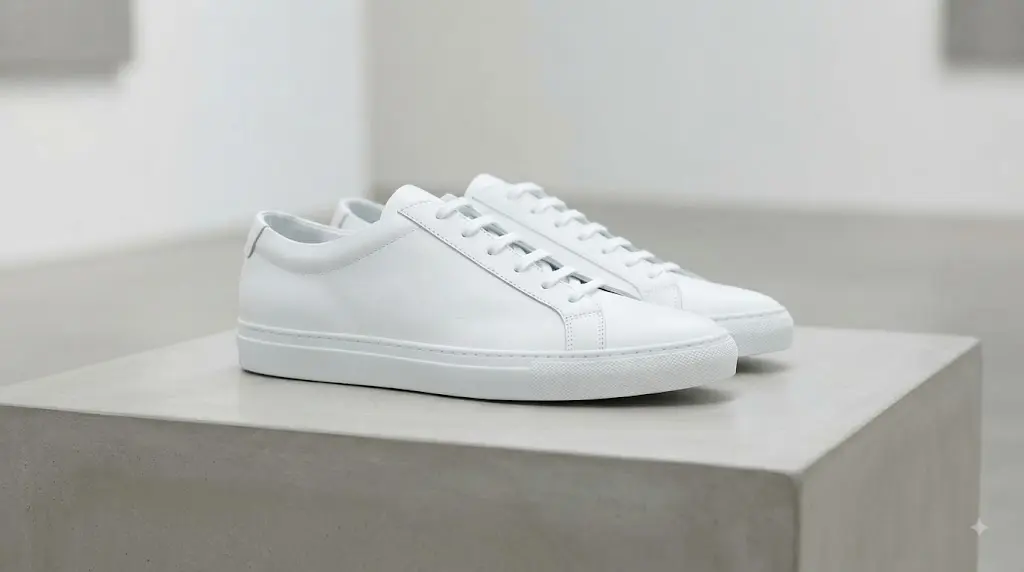
Style Tip If you only own one pair of leather sneakers, choose a low-top style in white or off-white. It pairs with tailored trousers, denim, and casual dresses alike, making it the most versatile single investment in a sneaker rotation.
How to Choose Sneakers for Your Lifestyle
The best sneaker isn’t the most popular one — it’s the one built for how you’ll actually use it.
Everyday Casual Wear
For daily wear, prioritize a durable, moderately cushioned sole and a material that resists scuffing, like leather or a treated canvas. These sneakers suit almost anyone who wants a low-maintenance shoe that pairs easily with jeans, chinos, or casual dresses. Those who need more structure for long walking days may prefer a dedicated walking or athletic shoe instead.
Athletic and Performance Use
If sneakers are doing double duty as workout shoes, cushioning technology and outsole grip matter far more than appearance. Runners and gym-goers benefit from shoes designed for their specific activity, since running shoes and cross-training shoes are built with different support patterns. Anyone using sneakers purely for style rather than movement can prioritize looks over performance features.
Fashion-Forward and Statement Sneakers
Chunky soles, bold colorways, and platform styles work well for readers who want their footwear to make a statement, particularly with minimal outfits that let the shoe stand out. Those who prefer a quieter, more classic aesthetic may find these styles feel disproportionate to more tailored or formal outfits, and could lean toward a cleaner silhouette instead — a distinction covered in more detail in our guide to shoe styles worth adding to your wardrobe.
Fit, Sizing, and Comfort: Getting It Right
Even a well-made sneaker feels wrong if the fit is off, and sneaker sizing is notoriously inconsistent between brands.
How Sneakers Should Fit When You Try Them On
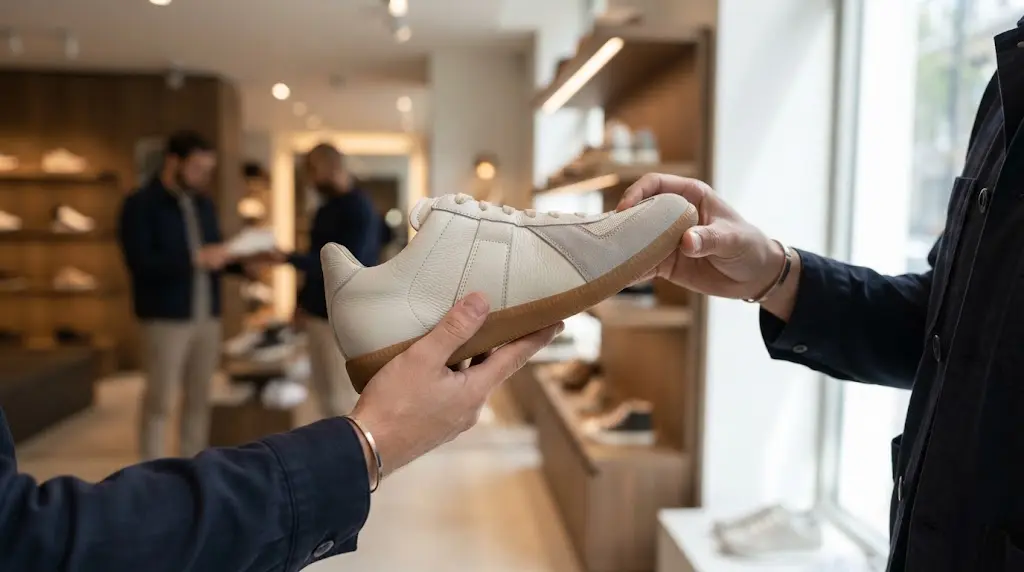
There should be roughly a thumb’s width of space between your longest toe and the front of the shoe. The heel should feel snug without slipping when you walk, and the widest part of your foot should align with the widest part of the shoe rather than pressing against the side seam.
Common Sizing Mistakes to Avoid
- Buying your usual size without trying the specific style, since fit varies even within the same brand.
- Shopping only in the morning, when feet are naturally smaller than later in the day.
- Ignoring width, especially for knit or mesh styles that stretch differently than leather.
- Ordering online without checking the brand’s specific size chart or return policy.
- Assuming break-in periods excuse a genuinely poor fit.
Color, Styling, and Outfit Pairing
Neutral Sneakers for Maximum Versatility
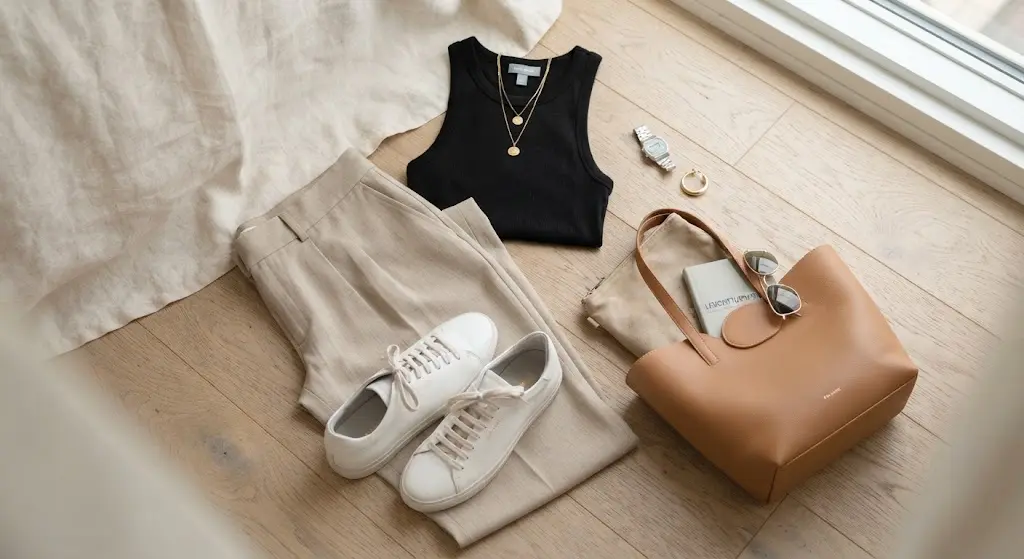
White, black, and tan sneakers do the most work in a wardrobe because they pair with nearly everything without competing for attention. A crisp white low-top under wide-leg trousers or a midi dress reads polished rather than sporty, especially when the rest of the outfit is kept relatively simple.
Bold and Statement Colors
Brighter or two-tone sneakers work best as the single focal point of an outfit. Pair them with a neutral base — think black jeans, a plain tee, or a monochrome dress — so the shoe has room to stand out instead of competing with other bold pieces.
Style Tip When building outfits around statement sneakers, keep jewelry and bags minimal. Letting one piece lead the outfit reads far more intentional than layering multiple loud elements at once.
For more everyday outfit formulas that work well with a sneaker-forward wardrobe, our everyday outfit ideas guide offers pairings that go beyond the basic jeans-and-tee combination.
Budget vs Premium: What You’re Really Paying For
| Factor | Budget Sneakers | Premium Sneakers |
|---|---|---|
| Typical materials | Synthetic uppers, basic foam | Leather, engineered mesh, advanced foam |
| Durability | 6–12 months with regular wear | 1–3+ years with proper care |
| Comfort break-in | Often immediate but short-lived | May need short break-in, holds shape longer |
| Best for | Occasional wear, trend testing | Daily wear, long-term wardrobe staples |
| Resale value | Minimal | Some styles retain value |
Spending more doesn’t automatically guarantee better quality, and spending less doesn’t automatically mean a shoe will fall apart. The comparison table above is a general pattern, not a guarantee — always apply the construction checks covered earlier regardless of price. Readers weighing similar trade-offs in dress footwear may also find our guide on choosing the best loafers useful, since many of the same material and construction principles apply.
Caring for Your Sneakers to Extend Their Life
Even a well-made sneaker needs some upkeep to look and perform its best over time.
- Wipe down uppers after wear, especially suede and light-colored leather, to prevent buildup that’s harder to remove later.
- Use a soft brush and mild cleaner suited to the specific material rather than a one-size-fits-all product.
- Let sneakers air dry away from direct heat, which can warp soles and crack certain materials.
- Rotate between at least two pairs regularly, giving cushioning time to decompress between wears.
- Store sneakers upright with shoe trees or stuffing to help maintain shape.
Style Tip Treat leather sneakers with a light conditioner every few months, the same way you would leather boots. It’s a small habit that noticeably extends the life of the material.
Readers who already maintain a leather shoe rotation may find helpful crossover advice in our guide to keeping leather boots looking new, since many of the cleaning and conditioning principles overlap.
Sustainability Considerations When Buying Sneakers
More brands are now offering sneakers made with recycled materials, plant-based leather alternatives, and more transparent supply chains. If sustainability factors into your decision, look for brands that publish specifics about material sourcing rather than vague claims, and consider material longevity as part of the sustainability equation — a shoe that lasts three years is inherently more sustainable than one replaced every few months, regardless of what it’s made from. Major athletic brands, including Nike, have published ongoing material and manufacturing initiatives worth reviewing if this is a priority in your buying decision.
Common Mistakes to Avoid When Buying Sneakers
- Choosing a size based on brand loyalty rather than trying on the specific style.
- Prioritizing looks over sole flexibility and cushioning, especially for shoes worn daily.
- Skipping the stitching and glue check before purchasing.
- Buying trend-driven statement sneakers without a plan for how they’ll fit into existing outfits.
- Neglecting basic care, which shortens the lifespan of even well-made pairs.
- Assuming a higher price always means better construction.
Building a Well-Rounded Sneaker Wardrobe
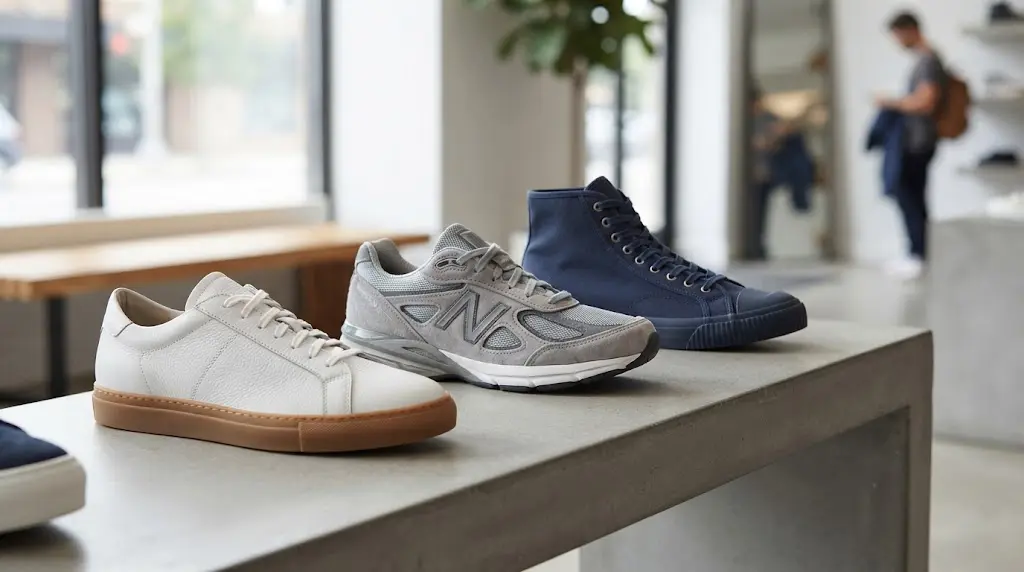
A practical sneaker rotation usually includes one neutral everyday pair, one athletic or performance pair suited to actual activity, and one statement pair for outfits that call for more personality. This mirrors the same layering logic used in building out a full capsule wardrobe, where a smaller number of well-chosen, versatile pieces outperforms a closet full of shoes that rarely get worn. Keeping an eye on seasonal shifts in footwear trends can also help you decide when it’s worth adding a new pair versus maintaining what you already own.
Frequently Asked Questions
How often should I replace my sneakers? Everyday sneakers typically need replacing every 12–18 months with regular wear, while athletic shoes used for running or training often wear out faster, around 300–500 miles depending on the shoe and surface.
Are expensive sneakers always better quality? Not necessarily. Price often reflects brand positioning and materials, but construction quality should always be checked directly rather than assumed from cost alone.
What’s the best way to keep white sneakers clean? Wipe them down after each wear, use a soft brush with a mild cleaner made for the specific upper material, and avoid machine washing leather or suede styles, since it can damage the material and affect shape.
Can sneakers be resoled like other shoes? Some higher-quality sneakers with glued or stitched rubber soles can be resoled by a cobbler, though it’s less common than with leather dress shoes. Checking with a local cobbler before assuming a pair is unsalvageable is worth the effort for well-loved pairs.
Is it better to size up or down for sneakers? Neither, as a rule — fit should be based on trying on the specific style rather than sizing up or down from your usual size, since sizing varies significantly between brands and even between shoe types from the same brand.
How many pairs of sneakers does a versatile wardrobe actually need? Three well-chosen pairs — one neutral everyday style, one performance pair, and one statement pair — cover most lifestyle needs without unnecessary overlap or wasted closet space.
Final Thoughts
Choosing quality sneakers comes down to understanding what you’re actually looking at — the materials in the upper, the construction at the sole, and how well a pair fits your specific lifestyle rather than a trend cycle. Once you know how to check stitching, judge midsole cushioning, and match a sneaker to the way you’ll actually wear it, the guesswork mostly disappears. From here, the outfit pairings, care routines, and sustainability choices become a lot easier to navigate with confidence, and that knowledge carries over to nearly every shoe purchase you make going forward.