The Complete Guide to Creating a Capsule Wardrobe
Somewhere between the third impulse buy you already regret and the tenth morning spent staring blankly into an overstuffed closet, most people start wondering if there’s a smarter way to get dressed. A capsule wardrobe is that smarter way: a tightly edited collection of pieces, built around a handful of versatile shoes, that work together instead of competing for attention.
This guide walks through how to build one from the ground up, starting with footwear, because the shoes you choose quietly decide how far the rest of your closet can stretch. You’ll find a practical formula for how many pairs you actually need, the core styles worth owning, how to layer color and fabric around them, and the maintenance habits that keep a smaller wardrobe working harder for longer.
What a Capsule Wardrobe Actually Means (and Why It’s Having a Moment)
A capsule wardrobe is a small, deliberately chosen set of clothing and shoes where nearly every piece can be worn with nearly every other piece. It’s not about owning as little as possible for its own sake. It’s about removing the pieces that only work with one outfit, so the ones that remain earn their closet space many times over.
The idea isn’t new. It’s often traced back to a 1970s London boutique owner named Susie Faux, who built her business around helping clients edit down to a small set of interchangeable staples, an approach that gained mainstream traction a decade later when Donna Karan launched her “Seven Easy Pieces” collection.
What’s changed is why people are returning to it now. Closets have grown faster than budgets or storage space, and the mental cost of choosing an outfit from too many options is real. A tighter, better-considered wardrobe cuts down on that daily decision fatigue, tends to save money over time, and produces less waste than constantly chasing trend pieces that fall apart after a season.
Why Footwear Is the Real Foundation of a Capsule Wardrobe
Most capsule wardrobe advice starts with tops and bottoms and treats shoes as an afterthought. That’s backwards. Shoes do more to signal formality, season, and mood than almost anything else in an outfit, and a mismatched pair can undercut an otherwise great look in seconds.
Start with footwear instead, and the rest of the wardrobe becomes easier to plan. Once you know your shoes are neutral, well-made, and genuinely versatile, choosing tops, bottoms, and outerwear that pair with them is a much shorter exercise.
How Many Pairs of Shoes You Actually Need
There’s no single correct number, but most stylists land somewhere between six and eight pairs for a fully functional capsule, adjusted up or down based on lifestyle. Footwear specialists at Clarks have suggested a practical minimum for their own seasonal capsule guidance: one or two pairs in a base neutral, a pair of flats, a pair of boots, a pair of sandals, and a casual trainer. That’s a reasonable floor to build from.
A quick way to right-size the number for your own life:
- Mostly casual or remote? Weight the capsule toward sneakers, one clean flat, and a versatile boot.
- Office-based most days? Add a second loafer or low heel and a dressier boot for cooler months.
- Frequent evenings out? Include one statement heel that can go from desk to dinner.
- Warm climate or frequent travel? Prioritize sandals and breathable flats over heavy boots.
Style Tip Before buying a new pair of shoes, ask whether it can genuinely replace two pairs you already own rather than simply adding a third similar option. If it can’t, it’s probably a want rather than a capsule need.
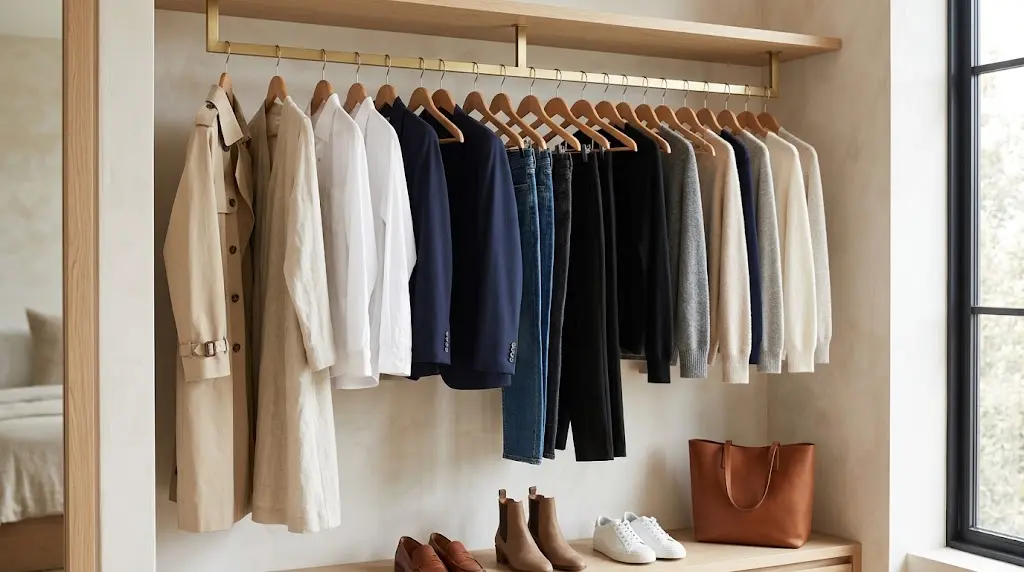
The Core Shoe Styles Every Capsule Wardrobe Needs
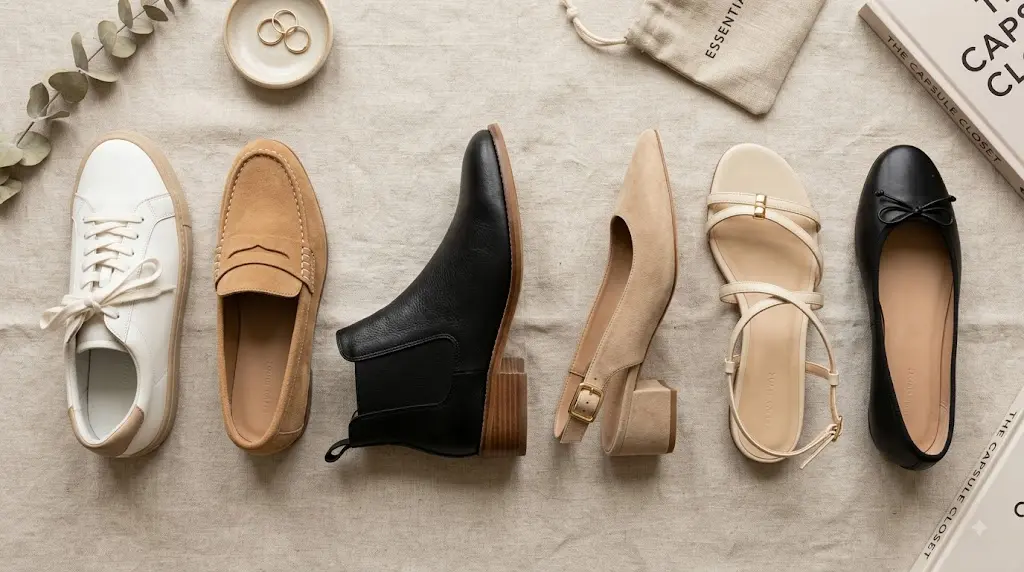
These five categories cover nearly every occasion a typical week throws at you, and they line up closely with the core shoe styles worth adding to any wardrobe.
The Everyday Sneaker
A clean, low-profile sneaker in white, off-white, or a neutral tone is the single hardest-working shoe in a capsule wardrobe. It suits almost anyone whose week includes errands, commuting, or casual weekends, though it’s not the right anchor piece for a wardrobe built mostly around formal office dressing.
Pair it with straight-leg jeans, tailored trousers, or a midi skirt for a look that reads intentional rather than lazy. Leather and canvas both work well; leather holds its shape longer and dresses up more easily. Budget shoppers can find solid options from mainstream athletic retailers, while those investing long-term often turn to brands with resole or repair programs. If you’re unsure where to start, this buyer’s guide to choosing quality sneakers breaks down what separates a shoe that lasts from one that won’t.
The Classic Loafer
Loafers bridge the gap between sneakers and dress shoes, which makes them one of the most versatile pieces a capsule wardrobe can include. They suit people who want a polished look without the stiffness of a heel, though anyone who needs all-day standing comfort may prefer a supportive flat instead.
A penny loafer or simple slip-on in black or cognac leather works with tailored trousers, wide-leg denim, or a slip dress with tights in cooler months. Suede versions feel softer for fall but need more careful upkeep. Budget-friendly options are widely available from mid-range retailers, while premium leather pairs from heritage shoemakers tend to hold their shape and color for years. For a deeper breakdown of fit and construction, how to choose the right loafers is worth a read before you buy.
A Versatile Ankle Boot
An ankle boot is the piece that carries a capsule wardrobe through fall and winter. It suits nearly everyone, from casual dressers who want to elevate jeans to office workers who need something polished but weather-appropriate; the main exception is warm-climate wardrobes, where a boot may only earn a few wears a year and could be swapped for a closed-toe flat instead.
Black or chocolate-brown leather in a rounded or slightly pointed toe pairs with everything from denim to tailored skirts. A block or low stacked heel adds versatility without sacrificing comfort. Because leather boots represent a real investment, learning how to keep leather boots looking new will meaningfully extend their lifespan and improve their cost per wear.
A Refined Heel or Dress Shoe
Every capsule benefits from one shoe that can go straight from a workday into dinner or an event. It suits anyone who occasionally needs to dress up, though someone who rarely wears heels can substitute a polished flat or a low kitten heel and get most of the same versatility.
A mid-height block heel in black or a warm neutral is far more wearable across seasons than a trend-driven silhouette. Satin and suede read dressier; leather is more forgiving day to day. This is one category where spending a little more tends to pay off, since a well-constructed heel is noticeably more comfortable over a full evening than a cheaply made one.
A Warm-Weather Sandal
A simple sandal rounds out the capsule for spring and summer. It suits anyone in a warm climate or planning travel, and it’s the one category that can reasonably sit out entirely in a cold-weather-only wardrobe.
A flat or low-heeled sandal in a neutral leather tone pairs with everything from denim shorts to a linen dress. Budget versions from mainstream retailers hold up fine for occasional wear; if sandals get heavy seasonal use, a leather sole with more structure will last longer than a purely decorative pair.
| Sneakers | Loafers | |
|---|---|---|
| Vibe | Casual, relaxed | Polished, structured |
| Best for | Errands, travel, weekends | Office, smart-casual |
| Dresses up easily | With effort | Yes |
| Comfort for all-day wear | High | Moderate to high |
| Seasonal range | Year-round | Best fall through spring |
Building the Rest of Your Capsule Wardrobe Around Your Shoes
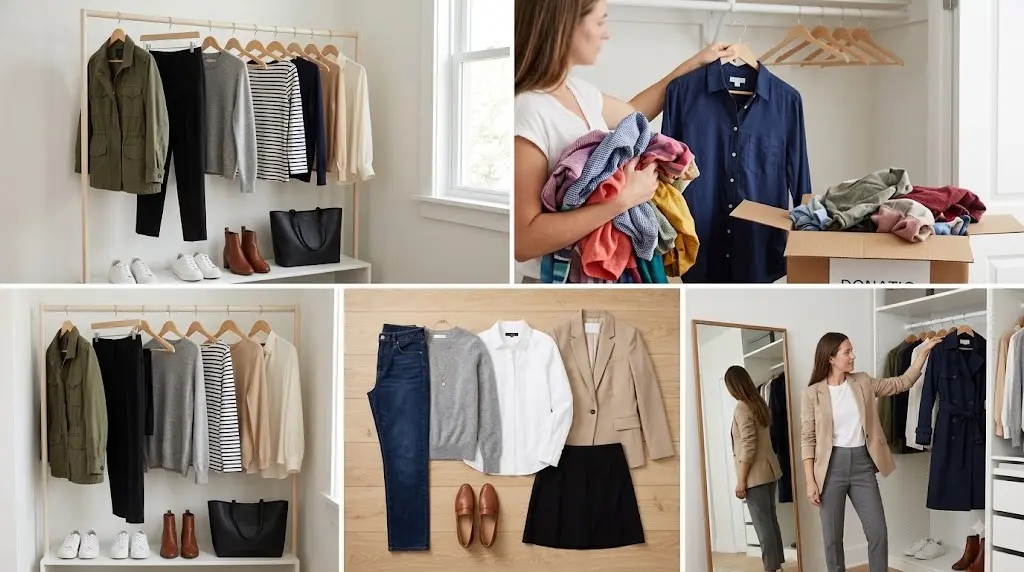
Once the shoe capsule is set, building outward is far simpler. Look at each pair and ask what fabrics and silhouettes it naturally complements. Sneakers want easy denim and relaxed knits; loafers want tailored trousers and structured tops; boots want midi skirts and layered knitwear.
Aim for pieces that can be dressed up or down rather than single-purpose items. A few well-fitted tops, one or two blazers, straight or wide-leg bottoms, and a couple of layering pieces will outperform a closet full of one-off outfits. For more on building outfits that stretch across a week, layering clothes for a polished look and styling wide-leg jeans both offer practical starting points.
Style Tip When trying on a new clothing piece, picture it with at least three shoes already in your capsule. If you can’t picture two of the three working, it likely doesn’t belong yet.
Choosing a Color Palette That Ties Everything Together
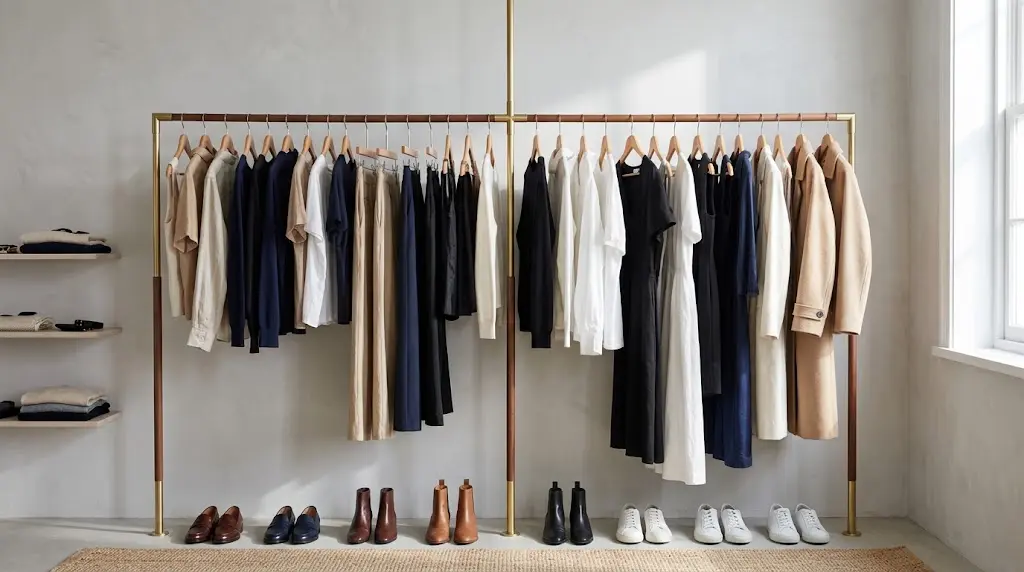
A capsule wardrobe lives or dies on its color palette. The goal isn’t to avoid color altogether, but to choose a small set of tones that genuinely coordinate, so that any top can reasonably pair with any bottom and any shoe.
| Neutral-Led Palette | Statement Palette | |
|---|---|---|
| Base tones | Black, white, camel, navy | One or two bold accent colors plus neutrals |
| Mixing ease | Very high | Requires more planning |
| Best for | First-time capsule builders | Those with an established personal style |
| Shopping speed | Faster, fewer decisions | Slower, more curated |
A neutral base of two or three coordinating tones, with room for one or two accent colors, is the approach most stylists return to, since it keeps nearly every piece interchangeable. If you want to work a seasonal color in without disrupting the rest of the capsule, keep it to a single item, such as a bag or a boot, rather than spreading it across multiple pieces. For a look at what’s trending this season specifically, the color palette taking over fall 2026 is a useful reference point for choosing an accent tone that still feels current.
Seasonal Considerations: Adapting Your Capsule Wardrobe Year-Round
A capsule wardrobe isn’t meant to be static. The framework stays the same season to season, but a handful of pieces rotate in and out to match weather and mood.
Fall and winter capsules lean on boots, closed-toe flats, and richer leather and suede textures; this season’s runways have leaned particularly hard into sleek, sculpted boot silhouettes and plush winter textures, which is worth keeping in mind if you’re due for a boot refresh. Spring and summer swap in sandals, lighter canvas sneakers, and breathable fabrics. The core five- to eight-pair structure doesn’t need to change, only which two or three pairs are in active rotation.
Sneakers are worth watching closely each season too, since silhouette trends shift faster there than almost anywhere else in footwear; low-profile, retro-inspired styles are currently having a strong moment. For a broader seasonal check-in, the footwear trends worth knowing this season is a good habit to revisit before each seasonal swap.
Accessories That Complete a Capsule Wardrobe
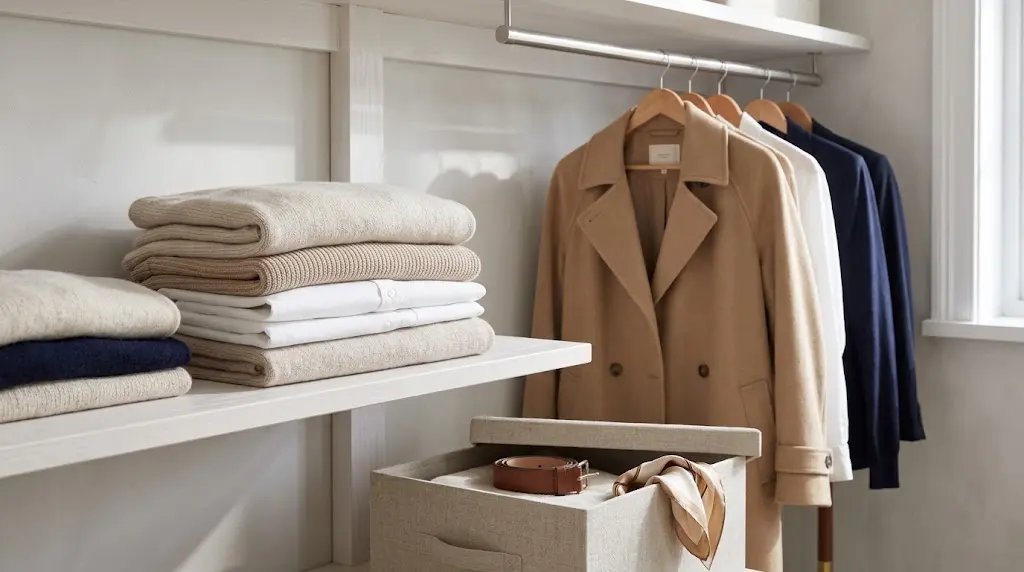
Accessories are where a capsule wardrobe gets its personality without adding real bulk. A structured bag in a neutral tone, a leather belt, and a small set of jewelry pieces do most of the heavy lifting.
- One everyday neutral bag that works with both casual and dressier outfits
- A leather belt in a tone that matches your shoe capsule
- A small set of gold or silver jewelry, kept consistent in metal tone
- One statement accessory, such as a scarf or a bold pair of earrings, for variety
This season’s handbag trends worth knowing can help you choose one bag that feels current without needing three separate ones. If you’re building out fall layering pieces, styling a belt with a sweater is a simple trick for adding shape to an otherwise simple silhouette.
Style Tip Choose one metal tone, gold or silver, and stick to it across jewelry and hardware on bags and belts. It’s a small consistency that makes a small wardrobe look noticeably more put-together.
Budget-Friendly vs Premium: How to Invest Wisely
Not every piece in a capsule wardrobe needs the same budget. The smarter approach is spending where the wear count is highest.
| Budget Approach | Premium Approach | |
|---|---|---|
| Where to spend | Trend pieces, sandals, seasonal color | Everyday sneakers, loafers, boots |
| Reasoning | Low commitment for short-lived styles | Highest wear frequency justifies cost |
| Typical lifespan | 1–2 seasons | 3+ years with care |
| Best mindset | Try trends without regret | Cost per wear drops the more it’s worn |
Cost per wear is a genuinely useful way to think about this: a well-made pair of boots worn 150 times over a few winters ends up costing far less per wear than a cheap pair replaced twice in the same period. That said, spending more only makes sense for pieces you’ll actually wear often; a rarely worn dress shoe doesn’t need the same investment as a daily sneaker. Once you do invest in leather footwear, proper care matters just as much as the purchase price, and keeping leather boots looking new is a good habit to build early.
Common Capsule Wardrobe Mistakes to Avoid
- Buying trend pieces before the basics are covered, leaving no foundation to build around
- Choosing shoes for how they look in a photo rather than how they feel after four hours of wear
- Skipping the “does it match three other things” test before a purchase
- Ignoring your actual climate and buying a capsule that only works for half the year
- Owning two or three pairs of shoes that are almost identical instead of genuinely different
- Neglecting maintenance, which shortens the lifespan of the exact pieces meant to last
How to Maintain and Rotate Your Capsule Wardrobe
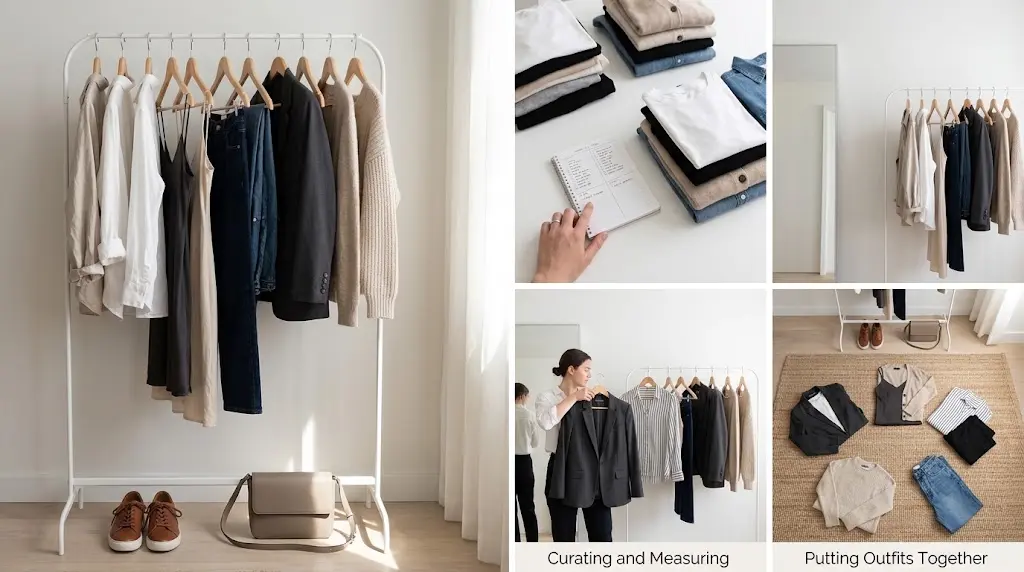
A smaller wardrobe only saves money and time if the pieces in it last. Rotating shoes rather than wearing the same pair daily gives leather and cushioning time to recover, which noticeably extends their lifespan. Store shoes with shoe trees or stuffed with paper to help them hold their shape between wears.
Seasonally, take ten minutes to audit what’s actually being worn. A piece that hasn’t been touched in a full season is either the wrong fit for your lifestyle or needs to be styled differently, and it’s worth being honest about which one it is before replacing it with something new.
Style Tip Set a recurring seasonal reminder to clean and condition leather shoes before storing them for the off-season. It takes fifteen minutes and prevents the cracking that usually forces an early replacement.
Frequently Asked Questions
How many shoes should a capsule wardrobe include? Most people land comfortably between six and eight pairs, though a strict minimalist can work with five and someone with varied social and professional demands may prefer closer to ten.
What’s the difference between a capsule wardrobe and just being minimalist? Minimalism is about owning less overall. A capsule wardrobe is more specific: it’s about owning fewer pieces that are all deliberately chosen to work together, not just fewer pieces in general.
Can a capsule wardrobe still include trendy pieces? Yes, and it should. The framework works best when trend pieces are added in small, low-commitment doses, such as one accent shoe or accessory, rather than replacing the neutral foundation.
How often should I refresh my capsule wardrobe? A light seasonal refresh, swapping two or three pieces for weather, works well for most people. A full audit once a year is usually enough to catch pieces that no longer earn their space.
What’s the best color to start a shoe capsule with? A true neutral, either black, cognac brown, or a warm off-white, gives you the most flexibility to build outfits around before adding anything bolder.
Is a capsule wardrobe actually cheaper than a regular wardrobe long-term? For most people, yes, since spending shifts from frequent low-cost purchases to fewer higher-quality ones with a much lower cost per wear over time, though the upfront cost of quality pieces can feel higher at first.
The Bottom Line
A capsule wardrobe isn’t about owning less for the sake of it. It’s about making sure everything in your closet, starting with your shoes, is actually working for you. Get the footwear foundation right, build outward with a limited color palette, and put a little care into maintenance, and getting dressed stops being a daily decision and starts being second nature.
From here, the natural next step is dialing in the individual pieces: comparing sneaker builds, finding the right loafer fit, or working out how to style what you already own for the week ahead.