How To Keep Leather Boots Looking New
A great pair of leather boots earns its place in your wardrobe fast — and it can hold that place for years if you treat it right. But most boots don’t fail because the leather wears out. They fail because of dried-out creases, water stains left to set, or a closet shelf that slowly warps the shape. None of that is inevitable.
This guide walks through what actually keeps leather boots looking sharp: the right cleaning routine, the difference between conditioning and polishing, how to weatherproof without overdoing it, and the small daily habits that matter more than any product. By the end, you’ll know exactly what your boots need — and just as importantly, what they don’t.
Why Leather Deserves More Attention Than People Give It
Leather is a natural material, which means it behaves differently from synthetic uppers. It’s porous, it breathes, and it contains natural oils that slowly evaporate with wear, heat, and exposure to the elements. Left untreated, those oils aren’t replaced, and the fibers start to stiffen and crack — usually right at the flex point across the toe, which is the first place people notice damage.
The upside is that leather also responds well to care. Unlike a synthetic sole that degrades no matter what you do, well-maintained leather can actually improve with age, developing a richer patina instead of just looking worn.
Know Your Leather Before You Treat It
Not all boot leather is the same, and using the wrong product on the wrong finish is one of the fastest ways to cause damage.
- Full-grain and top-grain leather — smooth, durable, and the most common finish on boots. Takes polish and cream well.
- Suede — has a soft, napped surface. Never use water-based cleaners or polish; it needs a dedicated suede brush and suede-specific protector.
- Nubuck — similar to suede but slightly more durable. Also brushed rather than polished, with its own cleaning products.
- Patent leather — has a glossy coated finish. Needs gentle wiping only; conditioner and polish can dull or damage the coating.
Style Tip If you’re not sure what leather your boots are made from, check the inside label or the original box. Treating suede like smooth leather (or vice versa) is one of the most common — and most damaging — mistakes people make in the first few months of ownership.
Building A Simple Leather Boot Care Kit You’ll Actually Use
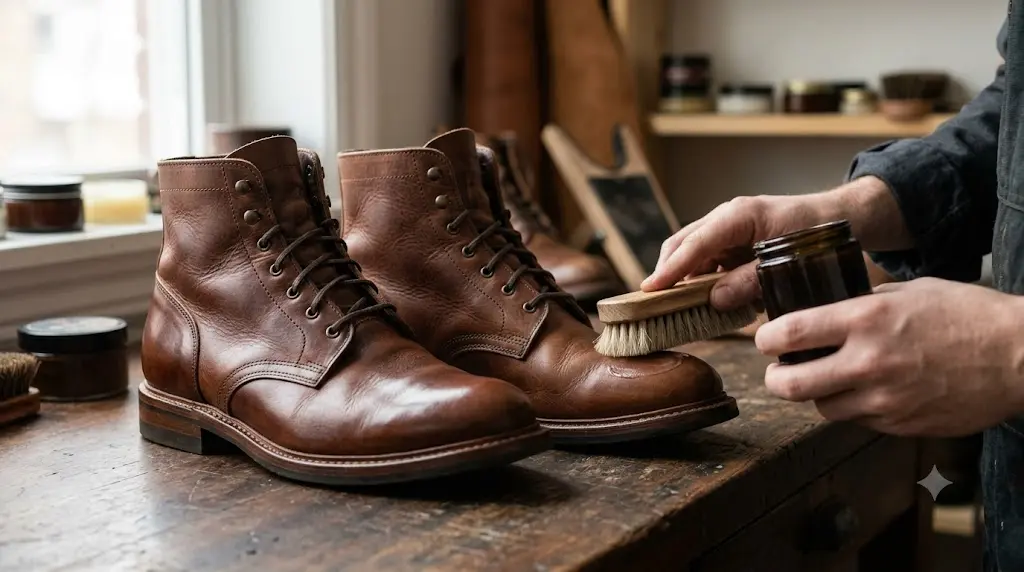
You don’t need a professional cobbler’s bench. A small, consistent kit does more for your boots than an expensive product you only use once.
- A soft-bristled brush for surface dirt
- A clean microfiber cloth (or two — one for cleaning, one for buffing)
- A pH-balanced leather cleaner
- A leather conditioner suited to your boot’s finish
- A waterproofing spray or wax, depending on climate
- Shoe trees to help boots hold their shape between wears
| Care Level | What’s Included | Best For |
|---|---|---|
| Budget Kit | Multi-purpose leather wipes, a basic brush, drugstore conditioner | Casual boots, occasional wear, first-time buyers |
| Premium Kit | Dedicated cleaner and conditioner by leather type, horsehair brush, cedar shoe trees, wax polish | Investment boots, daily wear, dress or work boots |
Both approaches work. The premium kit simply gives you more control over finish and shine, which matters more if your boots are a frequent, visible part of your outfit.
The Small Daily Habits That Do Most Of The Work
Products matter less than consistency. A handful of habits, done regularly, prevent most of the damage that eventually requires deep repair.
- Wipe boots down with a dry cloth after each wear, especially in dusty or wet conditions
- Use shoe trees or stuff boots with paper when they’re not being worn
- Let wet boots air dry away from direct heat — never on a radiator or in front of a heater
- Rotate between two pairs if you wear boots daily, so the leather has time to fully dry and rest
- Unlace boots before removing them instead of forcing your foot out, which stresses the heel counter
How To Clean Leather Boots Step By Step
- Remove laces and loose dirt. Brush off dust and debris with a soft-bristled brush before anything touches the leather.
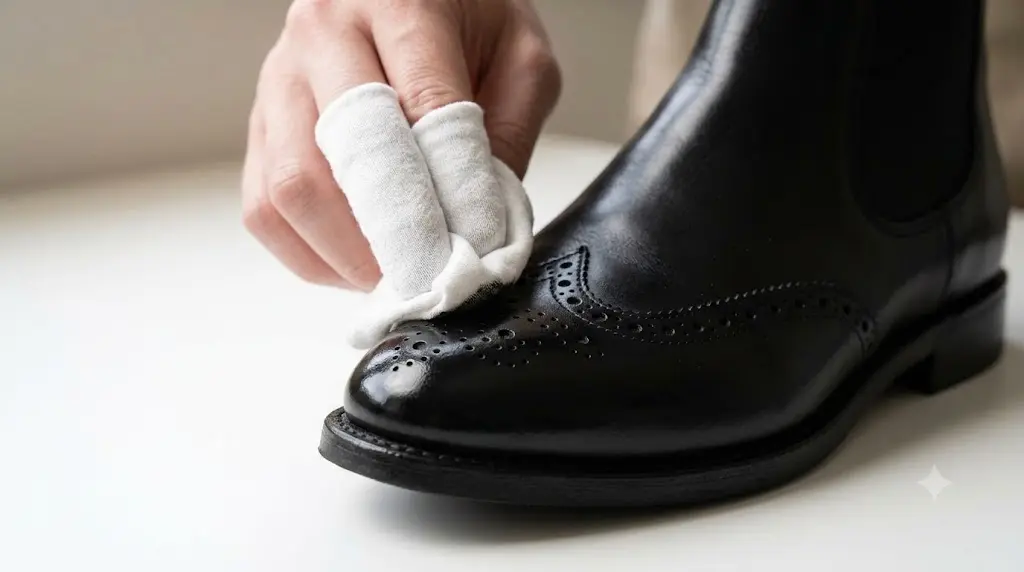
- Apply cleaner sparingly. Put a small amount on a damp cloth — not directly on the boot — and work it in with gentle circular motions.
- Wipe away residue. Use a second, clean damp cloth to remove any leftover cleaner.
- Air dry fully. Let the boots sit at room temperature until completely dry before conditioning — this usually takes several hours.
- Check stitching and hardware. Use a cotton swab for detailed cleaning around eyelets and seams where grime tends to build up.
Conditioning and Polishing: What Each Step Actually Does
These two steps get confused constantly, but they solve different problems.
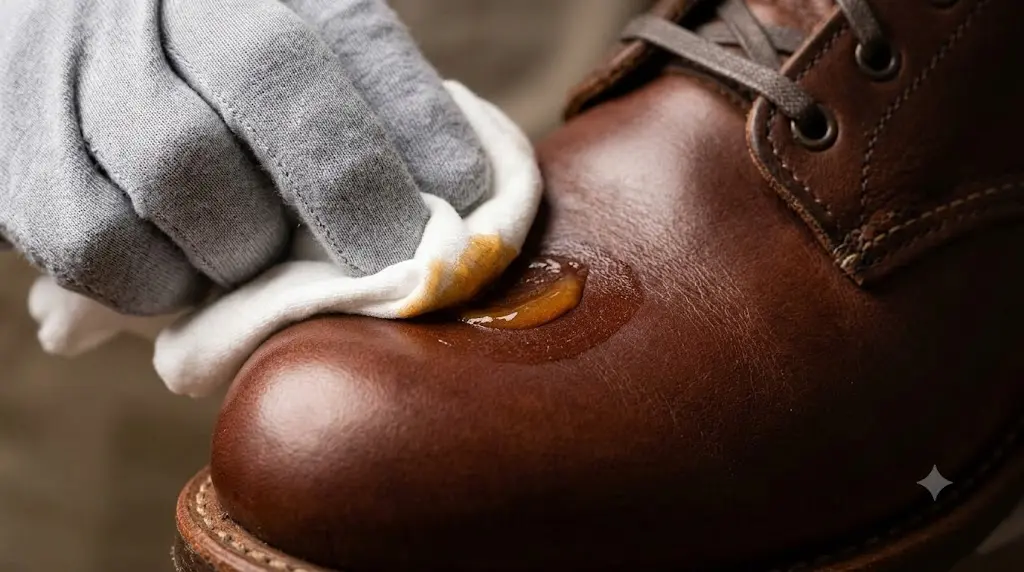
Conditioning replaces the natural oils leather loses over time. It keeps the material flexible and prevents the cracking that shows up first at the toe flex and ankle crease. Conditioner should be applied to clean, dry leather, worked in with a soft cloth, and given time to absorb before wearing the boots again.
Polishing is mostly cosmetic. It restores color to scuffed areas and builds shine, but it doesn’t nourish the leather the way conditioner does. Boots that only get polished and never conditioned still dry out — they just look glossy while it happens.
Style Tip Condition boots roughly every four to eight weeks if you wear them regularly, and immediately after any exposure to heavy rain or road salt. Polishing can happen more often — even weekly — since it’s a lighter, surface-level step.
Weatherproofing For Rain, Snow, and Unpredictable Days
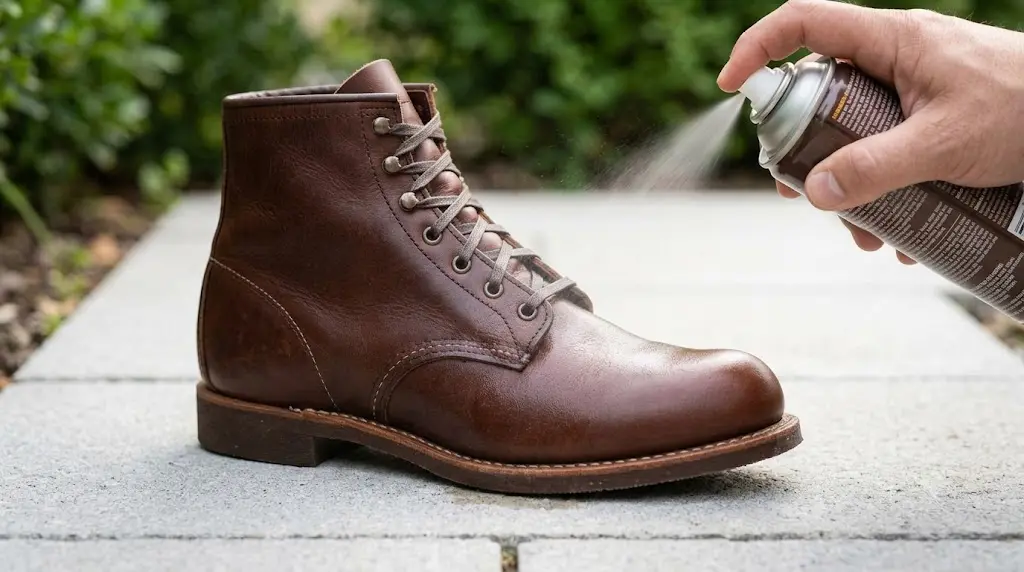
Weatherproofing spray or wax adds a protective barrier without changing how the leather feels. It’s not a substitute for conditioning — think of it as an additional layer, applied after conditioning and before you expect bad weather.
- Apply spray protectant to clean, dry boots, holding it several inches away for even coverage
- Reapply every few weeks during wet seasons, or after any deep clean
- For suede and nubuck, use a protector formulated specifically for napped leather — standard sprays can flatten the texture
- Let boots dry fully before wearing them outside, since some sprays need time to bond with the leather
If you’re building out cold-weather footwear alongside your boots, it’s worth checking our guide on the footwear trends worth knowing this season for what pairs well in rotation.
| Leather Type | Recommended Care Frequency | Key Product |
|---|---|---|
| Smooth/Full-Grain | Condition every 4–8 weeks | Cream or oil-based conditioner |
| Suede | Brush after every wear, protect monthly | Suede brush + suede protector spray |
| Nubuck | Brush weekly, protect monthly | Nubuck cleaner + protector |
| Patent | Wipe after wear, no conditioning needed | Soft damp cloth only |
Common Mistakes That Age Leather Boots Faster
- Drying wet boots near a heater or in direct sun, which causes the leather to shrink and crack
- Skipping conditioner because the boots “still look fine” — damage often starts before it’s visible
- Using all-purpose household cleaners instead of leather-specific products
- Storing boots upright without support, which lets the shaft collapse and crease permanently
- Ignoring small scuffs until they turn into deeper cracks that are harder to treat
Storing Leather Boots Between Seasons
Give boots one last clean-and-condition session before putting them away for the season. Store them somewhere cool, dry, and dark — direct sunlight fades leather over time, and damp closets encourage mildew.
- Insert shoe trees or acid-free paper to help the shaft and toe hold their shape
- Use breathable fabric bags rather than sealed plastic, which can trap moisture
- Avoid stacking boots or storing them on their side for long periods
- Check on them periodically through the off-season, especially in humid climates
Styling Leather Boots So They Earn Their Keep
Well-cared-for boots aren’t just longer-lasting — they photograph and wear better, which makes them easier to build outfits around. Leather boots pair naturally with structured pieces: a tailored coat, straight-leg denim, or a midi skirt with opaque tights all let the boot read as intentional rather than incidental.
Style Tip Keep boots and other leather accessories in the same care rotation. If you’re already caring for boots, it takes almost no extra effort to extend the same routine to a good pair of leather gloves — they respond to the same conditioning principles.
If boots are becoming a wardrobe staple, it’s worth thinking about them alongside other investment footwear. Our breakdown of how to choose the right loafers covers similar quality markers to look for, and our guide to choosing quality sneakers is a useful comparison if you’re deciding where else to spend on footwear this season.
When To Repair Versus Replace
Leather boots are one of the few wardrobe items genuinely worth repairing rather than replacing. A cobbler can typically:
- Replace worn soles and heels without touching the upper
- Re-dye or re-condition leather that’s faded but structurally sound
- Repair minor stitching and seam separation
Replacement makes more sense when the leather itself has cracked through, the shape has permanently collapsed, or repair costs approach the price of a comparable new pair. If you’re weighing whether to invest in a higher-quality pair next time, our guide to building a capsule wardrobe has useful thinking on cost-per-wear that applies directly to footwear.
Frequently Asked Questions
How often should I condition leather boots? Roughly every four to eight weeks with regular wear, and always after exposure to heavy rain, snow, or road salt. Boots worn only occasionally can go longer between conditioning sessions.
Can leather boots get wet, or should I avoid rain entirely? Occasional rain is fine as long as boots are properly weatherproofed and allowed to air dry afterward. Prolonged soaking or standing water is what causes real damage.
What’s the actual difference between conditioner and polish? Conditioner nourishes the leather fibers and prevents cracking; polish is a cosmetic layer that restores color and shine. Boots need both for different reasons, not one instead of the other.
How do I get rid of salt stains from winter boots? Mix equal parts water and white vinegar, wipe the stained area with a cloth dampened in the solution, then let the boots dry fully before conditioning. Treat stains as soon as you notice them.
Is suede more high-maintenance than smooth leather? It requires different care rather than more care — suede needs brushing and specific protectants instead of cream or polish, but the time commitment is similar.
How long should a well-made pair of leather boots actually last? With consistent care and occasional resoling, quality leather boots can reasonably last five to ten years or longer, which is part of why the upfront cost is worth it for boots you’ll wear often.
Final Thoughts
Keeping leather boots looking new isn’t about finding one magic product — it’s a rhythm of small habits: wiping them down after wear, conditioning before they start to look dry, weatherproofing before the weather turns, and storing them properly when the season changes. Get that rhythm in place, and a good pair of boots will keep earning its spot in your rotation for years rather than one season.
If you’re building out the rest of your footwear collection, it’s worth exploring which other shoe styles are worth adding to your wardrobe alongside a well-cared-for pair of boots. For more on proper leather maintenance, Dr. Martens’ own official care guide is a solid reference for product-specific routines.