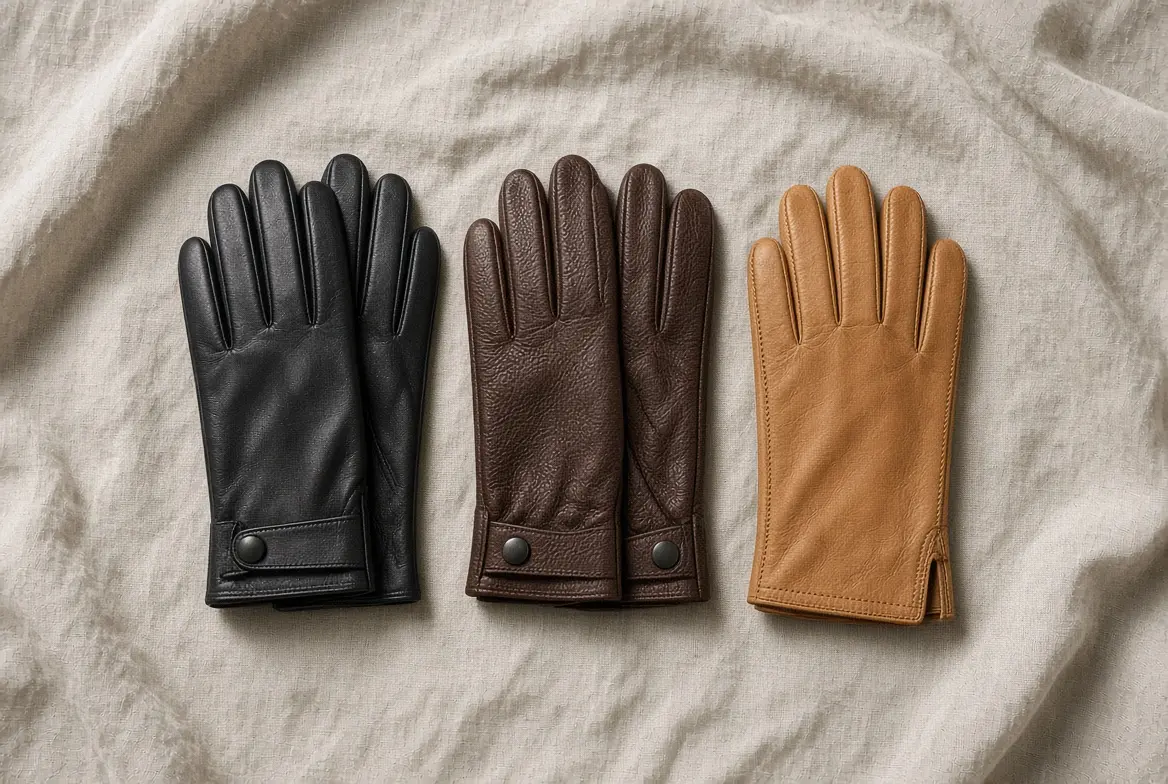
How to Choose the Right Leather Gloves: A Complete Buying Guide
A good pair of leather gloves does more than keep your hands warm. It finishes an outfit the way a well-chosen belt or bag does, and unlike most accessories, it’s one you’ll actually touch, flex, and rely on all season long. That’s exactly why choosing the wrong pair is so noticeable — stiff leather, a bad fit, or a lining that traps moisture instead of warmth can make an otherwise expensive-looking glove feel cheap within a few wears.
This guide walks through what actually separates a well-made leather glove from a mediocre one: the leather itself, how it should feel in your hand, sizing that won’t leave you regripping your steering wheel every five minutes, and how to match style and color to the rest of your wardrobe. By the end, you’ll know what to check before you buy, not just what to buy.
Why Leather Still Wins for Cold-Weather Accessories
Leather remains the material of choice for gloves for a simple reason: it’s one of the few fabrics that gets more comfortable with wear rather than less. A well-made leather glove molds to the shape of your hand over time, something synthetic alternatives rarely do. It also blocks wind more effectively than most knits and, when properly cared for, lasts for years rather than seasons.
That said, leather isn’t a single material — it varies enormously depending on the animal it comes from, how it’s tanned, and how it’s finished. Understanding those differences is the real starting point for choosing gloves that will hold up.
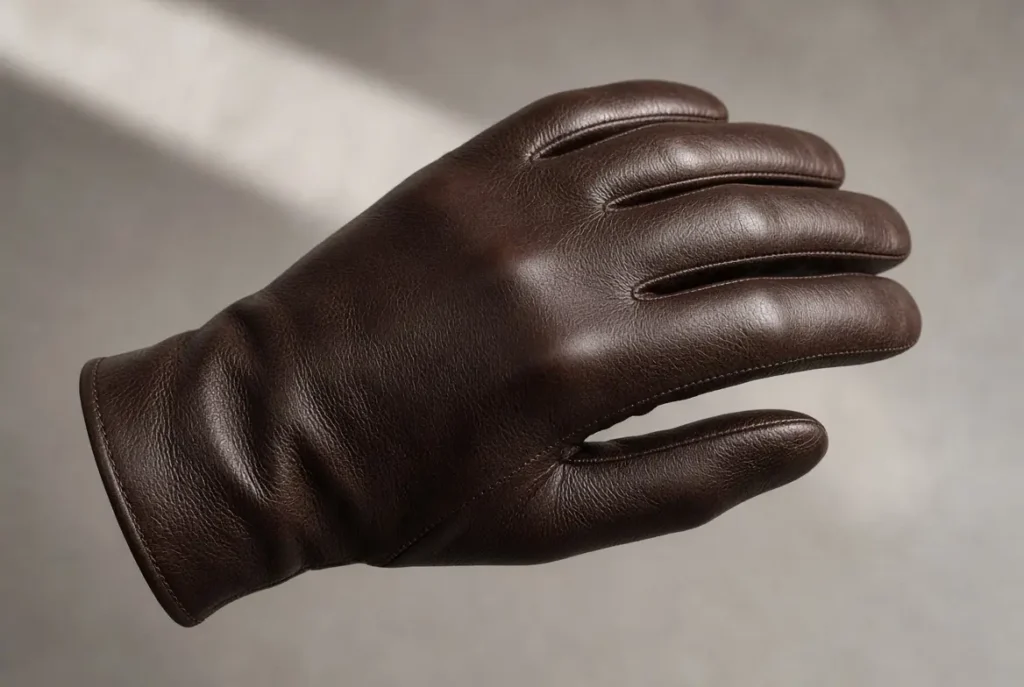
Understanding Leather Types Before You Buy
Not all leather gloves are cut from the same cloth, so to speak. The type of hide used affects softness, durability, breathability, and price, often significantly.
Lambskin
Lambskin is the benchmark for luxury gloves. It’s exceptionally soft, thin enough to allow good dexterity, and drapes naturally around the fingers. The trade-off is durability — lambskin is more prone to scuffing and tearing than thicker hides, so it suits gloves meant for dressier, lower-impact wear rather than daily rough use.
Sheepskin
Slightly thicker and more resilient than lambskin while still soft, sheepskin is a practical middle ground. It handles daily wear well and is commonly used in mid-range to higher-end glove lines.
Goatskin
Goatskin is naturally more water-resistant and durable than lamb or sheep leather, thanks to its tighter grain. It’s a strong choice for gloves that need to survive daily commuting, driving, or unpredictable weather without losing shape.
Deerskin
Deerskin is prized for being both soft and strong, with a slightly textured, matte finish. It breathes well and is a favorite for gloves designed for driving or outdoor use, where grip and flexibility matter as much as warmth.
Nappa Leather
“Nappa” refers to a tanning process rather than a specific animal, most often applied to lamb or goat hides to produce an especially smooth, supple finish. Nappa leather gloves tend to look polished and even, making them a popular choice for dressier or fashion-forward styles.
| Leather Type | Softness | Durability | Best For |
|---|---|---|---|
| Lambskin | Very High | Moderate | Dress gloves, evening wear |
| Sheepskin | High | Good | Everyday wear |
| Goatskin | Moderate | Very High | Driving, daily use, wet weather |
| Deerskin | High | High | Driving, outdoor activity |
| Nappa | Very High | Moderate | Fashion styles, dressier looks |
How to Judge Leather Quality by Feel and Finish
Once you know the general leather type, quality still varies within it. A few checks help separate genuinely good leather from lower-grade material dressed up to look premium.
- Feel for evenness. Quality leather feels consistent across the whole glove, without noticeably thicker or thinner patches.
- Check the seams. Stitching should be tight, even, and free of loose threads. Bulky or uneven seams often signal rushed construction.
- Look at the grain. Natural, slightly irregular grain usually indicates full or top-grain leather. A perfectly uniform, plastic-like sheen can be a sign of bonded or heavily coated leather.
- Press and release. Good leather should spring back gently rather than staying creased or feeling stiff and board-like.
Style Tip Rub a small area of the leather gently with your thumb. If color transfers onto your skin or the surface feels tacky, it’s likely a lower-quality, heavily treated leather rather than genuine full-grain material.
Getting the Right Fit: Glove Sizing Explained
Fit is where most online glove purchases go wrong. A glove that’s too tight restricts movement and wears out faster at the seams; one that’s too loose bunches at the fingertips and won’t insulate properly.
How to Measure Your Hand
Wrap a soft tape measure around your dominant hand at its widest point, just below the knuckles, excluding the thumb. Measure in inches, and round up to the nearest half inch. Most glove size charts convert this measurement directly into a size, typically ranging from 6 (extra small) to 11 (extra large).
Signs a Glove Fits Right
- Fingers reach the tips of the glove without excess material bunching at the ends
- You can make a loose fist without the leather pulling tight across the knuckles
- The wrist opening sits comfortably without gaping or squeezing
- There’s a small amount of room to allow for a thin lining without over-tightening
Leather also stretches slightly with wear, so a glove that feels just snug when new, rather than loose, usually ends up fitting best after a few uses.
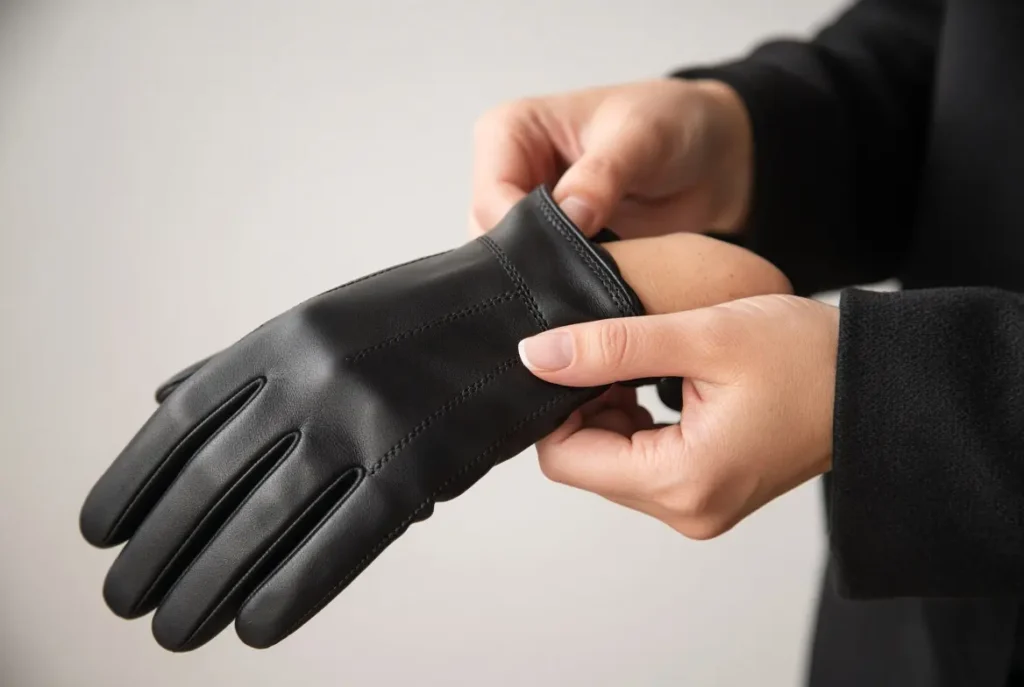
Choosing a Lining for Warmth and Comfort
The lining affects warmth, comfort, and how the glove feels against your skin far more than most buyers expect.
| Lining Type | Warmth Level | Feel | Best For |
|---|---|---|---|
| Cashmere | High | Very soft, lightweight | Cold climates, dressier gloves |
| Wool | High | Slightly textured | Everyday winter wear |
| Silk | Moderate | Smooth, breathable | Mild cold, easy layering |
| Shearling | Very High | Plush, bulkier | Extreme cold, outdoor wear |
| Unlined | Low | Closest to skin | Mild weather, driving, dexterity |
Cashmere-lined gloves strike the best balance of warmth and slimness, which is why they’re common in higher-end glove lines. Wool linings run a close second and tend to be more budget-friendly. If you frequently use a touchscreen, look for gloves labeled touchscreen-compatible, since thicker linings like shearling often interfere with responsiveness.
Style Tip If you switch between driving and walking outdoors during your commute, an unlined or silk-lined glove offers better grip and dexterity than a bulkier wool or shearling lining.
Matching Glove Style to Your Wardrobe and Occasion
Leather gloves generally fall into three categories, and choosing between them comes down to how — and where — you plan to wear them.
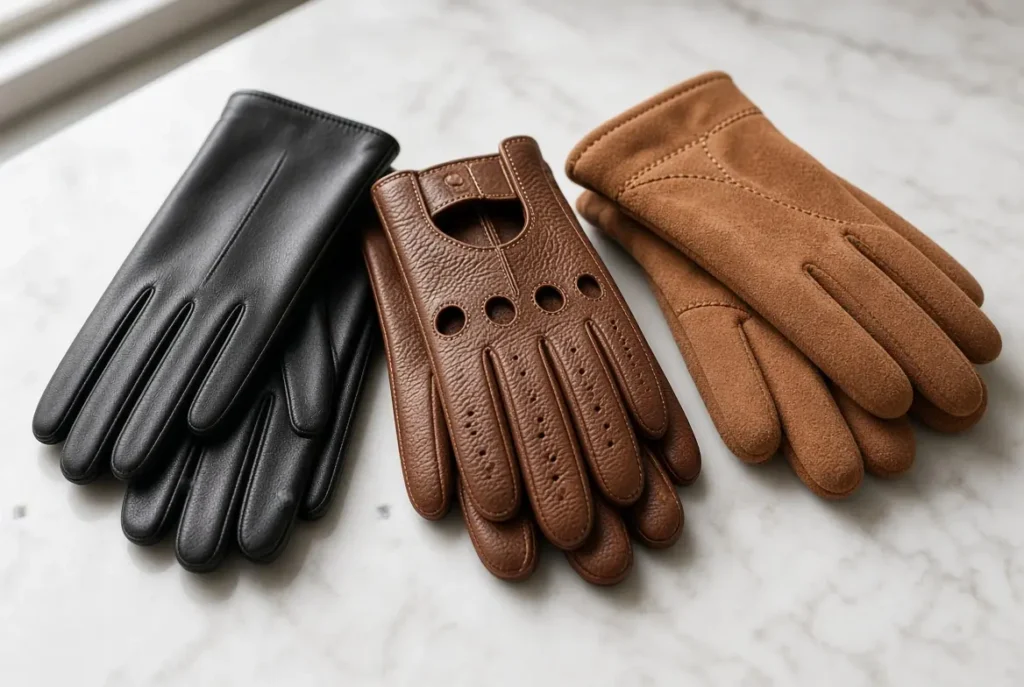
Dress gloves are close-fitting, often in lambskin or nappa leather, and suit tailored coats, structured outerwear, and formal or business settings. They photograph well and pair naturally with a polished, put-together look.
Driving gloves are shorter, more flexible, and often feature perforated backs or knuckle cutouts for grip and breathability. They suit anyone who wants function without sacrificing style, and they layer easily under a jacket sleeve.
Casual gloves tend to be slightly thicker, sometimes fleece- or wool-lined, and pair naturally with everyday outerwear, denim, and knitwear. They’re the most forgiving option if you’re not sure which category fits your lifestyle yet.
Readers who prioritize a sleek, minimal look will likely prefer dress gloves, while anyone who spends a lot of time outdoors or wants a more rugged, textured finish may lean toward casual or deerskin driving styles instead.
Color and Finish: What Works With Your Outfits
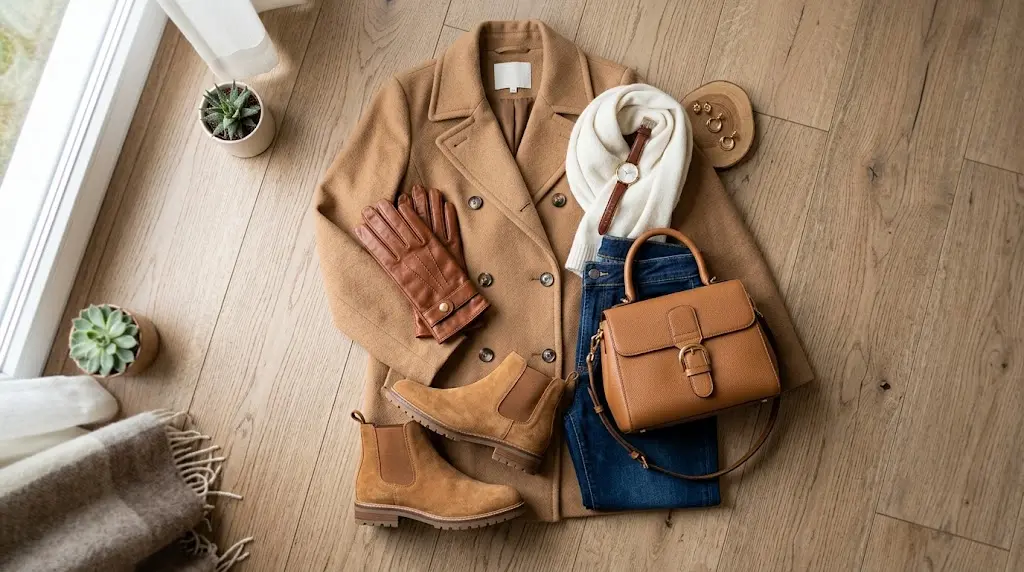
Black remains the most versatile glove color, working with nearly every coat and bag color you own. Brown, particularly cognac or chestnut tones, pairs beautifully with camel coats, denim, and warm neutrals, and tends to read slightly more casual than black.
- Black gloves — pair with black, grey, navy, or monochrome outerwear
- Cognac or tan gloves — pair with camel, olive, rust, or denim
- Burgundy or deep green — work as a subtle statement with neutral coats
- Metallic or patent finishes — best reserved for eveningwear rather than daily rotation
A simple rule that holds up across most outfits: match your gloves to your bag or your boots, not necessarily your coat. This creates cohesion without forcing every piece to match exactly, similar to how our capsule wardrobe guide approaches building pieces that work interchangeably.
Seasonal Considerations
Glove choice should shift with the season, not stay static year-round.
- Early autumn: unlined or silk-lined gloves in lighter leather, mainly for style and light wind protection
- Deep winter: cashmere or wool-lined gloves in a slightly thicker leather like sheepskin or goatskin
- Extreme cold: shearling-lined gloves, prioritizing warmth over dexterity
- Rainy or damp climates: goatskin or treated leather, which resists moisture better than lambskin
If you live somewhere with mild winters, one well-made mid-weight pair can realistically cover the entire season, which is often a better investment than buying multiple lightweight pairs.
Accessorizing With Leather Gloves
Gloves work best as part of a considered outfit rather than an afterthought grabbed on the way out the door. Leather gloves pair naturally with other leather accessories — a structured tote, a leather belt, or leather boots that have been properly cared for all read as a cohesive, intentional look rather than mismatched pieces.
For anyone building out a broader accessory wardrobe, it’s worth thinking about gloves the same way you’d think about choosing the right pair of loafers — as an investment piece that needs to earn its place through quality and versatility, not just trend appeal.
Budget vs Premium: What You’re Really Paying For
Price differences in leather gloves usually come down to leather grade, construction, and lining quality rather than branding alone.
| Feature | Budget Option | Premium Option |
|---|---|---|
| Leather type | Sheepskin or blended leather | Lambskin, goatskin, or deerskin |
| Lining | Polyester or acrylic blend | Cashmere, wool, or silk |
| Stitching | Machine-finished, simpler seams | Hand-finished detailing |
| Lifespan | 1–2 seasons with care | 5+ years with proper care |
| Price Range | $30–$70 | $100–$300+ |
A budget pair is a completely reasonable choice for someone who wants a functional, stylish glove without a big investment, especially if leather care isn’t a priority. A premium pair makes more sense for anyone who wears gloves daily through a full winter and wants the leather to age and soften over years of use.
Style Tip If you’re unsure how often you’ll actually wear gloves, start with a mid-range goatskin pair. It offers better durability than budget lambskin blends without the price jump of a fully premium line.
Common Mistakes to Avoid When Buying Leather Gloves
- Buying a size up “to be safe,” which leaves excess material at the fingertips and reduces dexterity
- Choosing a thick lining without considering touchscreen use, leading to constant glove removal
- Ignoring seam quality in favor of a lower price, which often means an early replacement
- Ignoring seasonal fabric weight and buying one glove to try to cover every temperature
- Skipping a leather conditioner entirely, which shortens the glove’s lifespan significantly
Caring for Your Leather Gloves So They Last
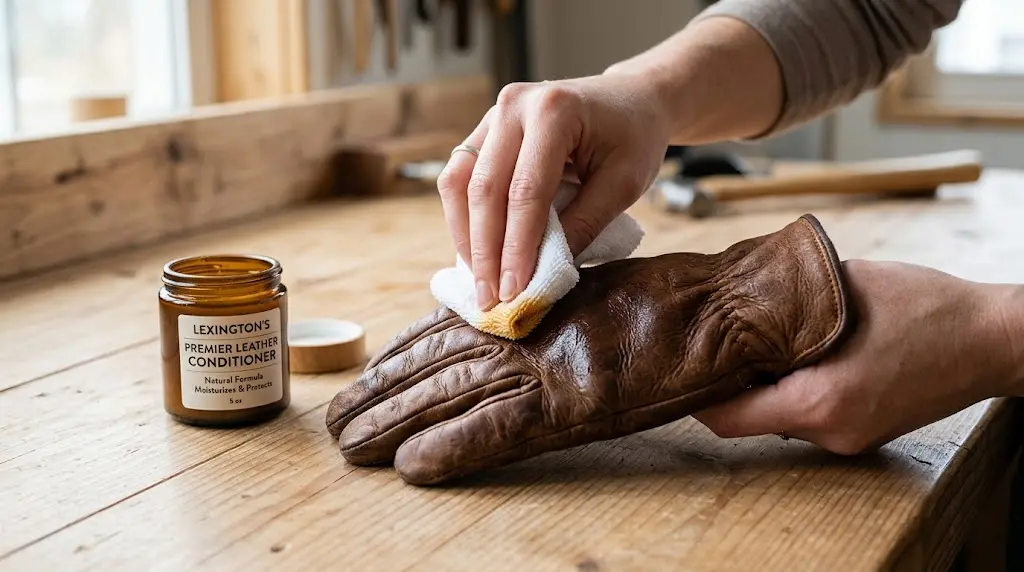
Leather gloves need far less maintenance than people assume, but a little care extends their life considerably. Let them air dry naturally if they get wet, never near direct heat, which causes cracking. A light leather conditioner every few months keeps the material supple, particularly for gloves worn frequently through winter. Store them flat or gently rolled rather than crumpled in a coat pocket, which helps them hold their shape between wears — much the same logic used in maintaining leather boots, where consistent, light care outperforms occasional deep cleaning.
Sustainability Considerations When Buying Leather Accessories
Leather production has a real environmental footprint, and more buyers are factoring that into accessory purchases. Choosing a well-made pair that lasts for years, rather than replacing cheaper gloves every season, is itself a more sustainable approach. Some brands now offer gloves made from vegetable-tanned or traceable leather sources, which use fewer harsh chemicals in processing. If sustainability is a priority, it’s worth checking a brand’s material sourcing information directly before purchasing, since this varies significantly between manufacturers.
Frequently Asked Questions
How do I know what glove size to order online? Measure around your dominant hand at its widest point, just below the knuckles, and compare that measurement in inches to the brand’s specific size chart, since sizing can vary slightly between manufacturers.
Are lambskin gloves too delicate for daily wear? Lambskin is best suited to lighter, more occasional use. For daily wear, goatskin or sheepskin holds up better against regular friction and handling.
Can leather gloves get wet? Light moisture is fine and will dry naturally, but leather gloves shouldn’t be soaked or worn in heavy rain regularly unless the leather has been treated for water resistance, such as goatskin.
Do leather gloves stretch over time? Yes, most leather gloves loosen slightly and mold to your hand shape after a few wears, which is why a snug initial fit usually works out better than a loose one.
What’s the difference between driving gloves and regular leather gloves? Driving gloves are typically shorter, more flexible, and often feature perforated backs or knuckle cutouts for grip, while regular gloves prioritize warmth and coverage over flexibility.
How often should I condition leather gloves? For gloves worn regularly through winter, conditioning every two to three months is generally sufficient to keep the leather from drying out or cracking.
Final Thoughts
Choosing the right leather gloves comes down to a handful of practical decisions: the leather type that suits how often you’ll wear them, a lining that matches your climate and lifestyle, a fit that’s snug rather than loose, and a color that works with pieces you already own. None of these require guesswork once you know what to look for. A well-chosen pair, cared for properly, will outlast several cheaper replacements and quietly become one of the most reliable pieces in your winter wardrobe. For more ways to build out accessories that work together season after season, our footwear trend guide is a useful next stop.