How to Find the Best Sunglasses for Your Face Shape
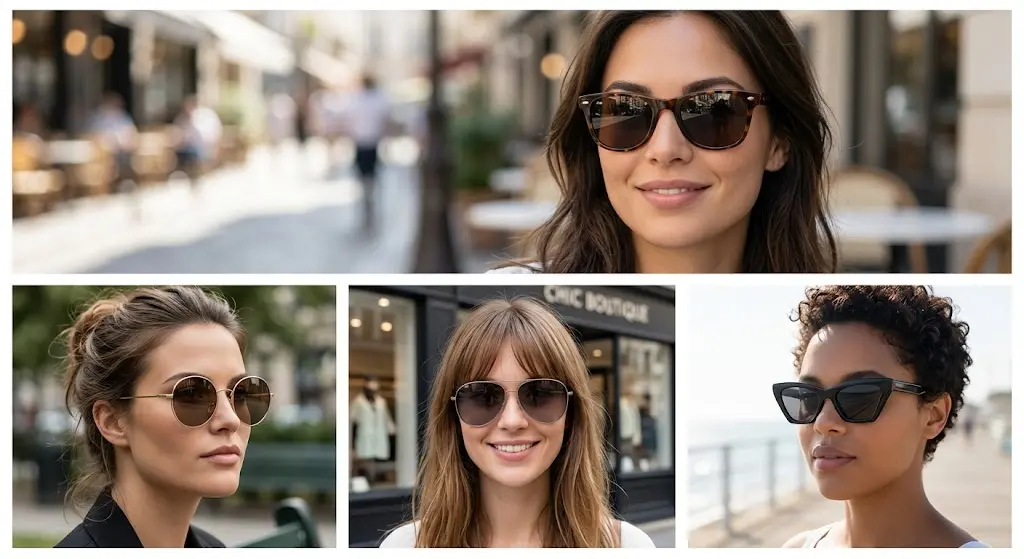
A great pair of sunglasses does more than block glare. It frames your face, balances your features, and can quietly pull an entire outfit together. Yet most of us buy sunglasses the way we buy phone chargers — quickly, based on what looks trendy in the store, without much thought.
That’s how so many people end up with a drawer full of sunglasses they never wear. The frames looked good on a mannequin or a friend, but something about them just felt off once they got home.
This guide walks through how to identify your face shape, which frame styles genuinely suit it, and how to think about lens color, materials, and budget. By the end, you’ll know exactly what to look for next time you’re trying on frames.
Why Your Face Shape Changes How Sunglasses Look on You
Sunglasses sit right at eye level, which makes them one of the most attention-grabbing accessories you can wear. Because of that, their shape either works with your natural features or fights against them.
The general rule is contrast. Angular faces tend to look softer and more balanced in rounded frames. Rounder faces usually benefit from a bit of structure. It’s the same logic stylists use when pairing our capsule wardrobe guide with an outfit — balance and proportion do most of the work.
This doesn’t mean there are strict rules you can’t break. Plenty of people wear “wrong” frames and look fantastic because confidence matters too. But knowing the guidelines gives you a starting point, especially if you’re shopping online and can’t try things on first.
How to Identify Your Face Shape at Home
You don’t need a stylist to figure this out. Stand in front of a mirror, pull your hair back, and look at the outline of your face.
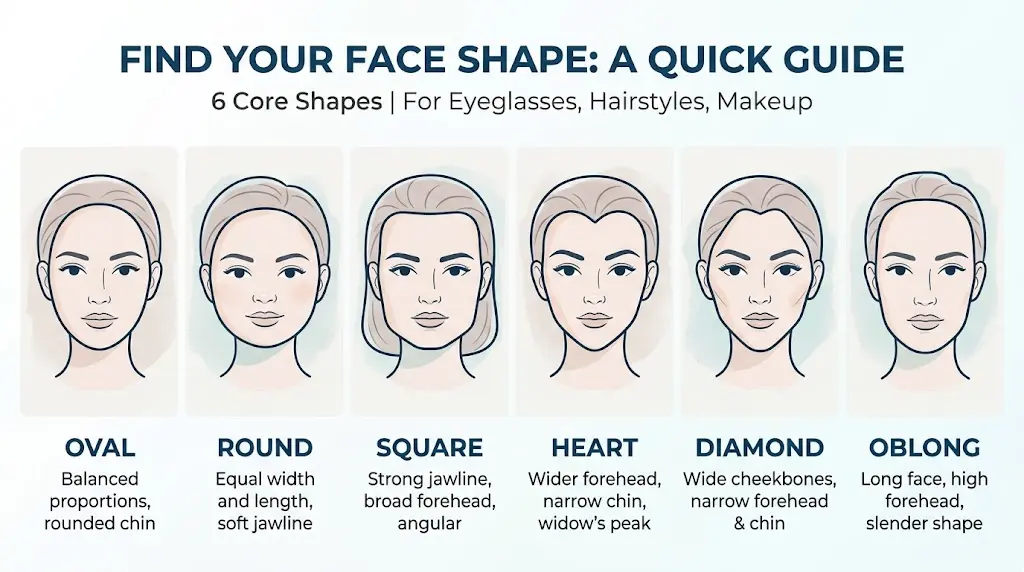
- Oval: Slightly longer than it is wide, with a gently rounded jaw and forehead that’s a touch wider than the chin.
- Round: Width and length are close to equal, with full cheeks and a softly curved jawline.
- Square: A strong, angular jawline and a broad forehead with very little curve.
- Heart: A wider forehead that narrows down to a pointed or narrow chin.
- Diamond: Narrow forehead and chin, with cheekbones as the widest point.
- Oblong: Noticeably longer than it is wide, with a straighter cheek line.
If you’re stuck between two shapes, that’s common. Go with the frame advice for whichever features are most pronounced, or lean toward styles that flatter both.
Finding the Right Sunglasses for Every Face Shape
Round Faces
Round faces have soft, curved lines, so the goal is adding definition. Angular frames — square, rectangular, or geometric shapes — create contrast that makes features look more sculpted.
Who it suits: Anyone with fuller cheeks and a rounded jawline.
Who may prefer an alternative: If your face is already quite angular elsewhere, very sharp frames can look severe; softer rectangles work better.
Style Tip
Look for frames slightly wider than your face and with straight top lines. This adds structure without looking harsh, especially in tortoiseshell or black acetate.
- Budget option: Classic square-frame acetate sunglasses from a drugstore or mass-market brand
- Premium option: Structured rectangular frames from an established eyewear house
Square Faces
Square faces have strong jawlines and broad foreheads, so rounded or oval frames soften those angles nicely. Cat-eye shapes work too, as long as the upswept corner isn’t too sharp.
Who it suits: Faces with a defined, angular jawline.
Who may prefer an alternative: If you love an edgy look, geometric frames can work — just avoid anything with hard right angles that echo your jawline.
- Budget option: Round metal-frame sunglasses in gold or silver tone
- Premium option: Oversized round acetate frames from a designer label
Oval Faces
Oval is often called the most versatile face shape, and it’s true — most frame shapes work here because the proportions are already balanced. Oversized frames, aviators, cat-eyes, and square shapes all tend to look good.
Who it suits: Anyone with balanced forehead-to-chin proportions.
Who may prefer an alternative: Extremely oversized frames can overwhelm smaller oval faces, so scale matters more than shape here.
Heart-Shaped Faces
Heart-shaped faces are widest at the forehead and narrow toward the chin. Frames that are wider at the bottom, or that have some detail lower on the lens, help balance that proportion. Aviators and rounded cat-eyes both work well.
Who it suits: Faces with a noticeably wider forehead and narrower jaw.
Who may prefer an alternative: Heavy, top-weighted frames like thick browlines can exaggerate forehead width — lighter frames or rimless styles are usually more flattering.
Style Tip
A thin metal aviator with a slightly rounded bottom balances a heart-shaped face beautifully without adding bulk near the temples.
Diamond Faces
Diamond faces have narrow foreheads and chins with wide cheekbones. Oval or cat-eye frames soften those cheekbones, while rimless or semi-rimless styles keep the look light.
Who it suits: Faces where cheekbones are clearly the widest point.
Who may prefer an alternative: Narrow rectangular frames tend to emphasize angularity rather than balance it.
Oblong Faces
Oblong faces are longer than they are wide, so the goal is adding width rather than length. Oversized frames, wide square shapes, and frames with decorative temples all help.
Who it suits: Faces that are noticeably longer than wide, often with a straighter cheek line.
Who may prefer an alternative: Narrow or small frames make the face look even longer, so it’s worth sizing up.
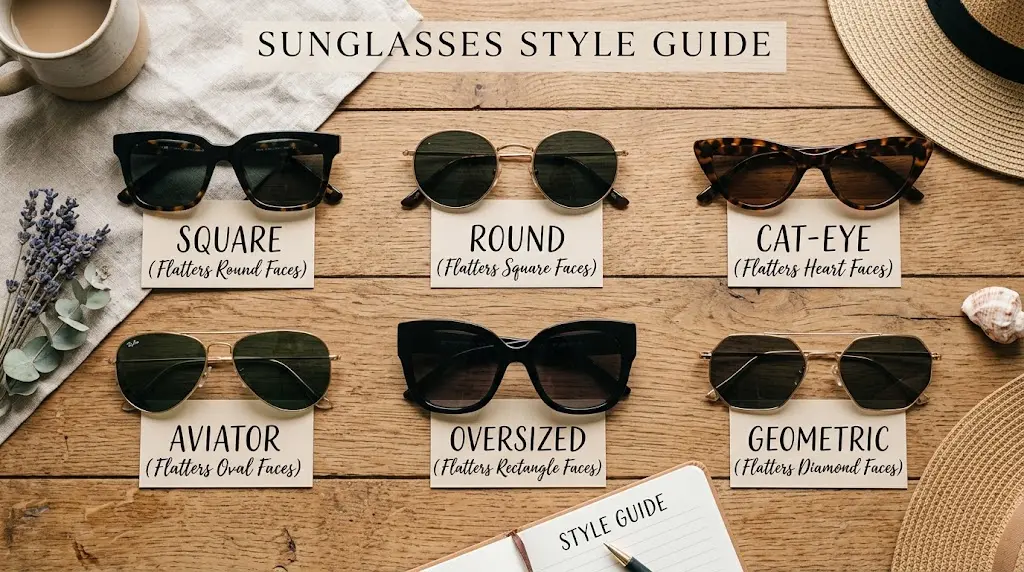
Frame Shape Cheat Sheet
| Face Shape | Best Frame Shapes | Frames to Avoid |
|---|---|---|
| Round | Square, rectangular, geometric | Round, small oval |
| Square | Round, oval, soft cat-eye | Sharp geometric, boxy square |
| Oval | Aviator, square, cat-eye, oversized | Extremely oversized on small faces |
| Heart | Aviator, rounded cat-eye, rimless | Heavy browline, top-weighted frames |
| Diamond | Oval, cat-eye, rimless | Narrow rectangular |
| Oblong | Oversized, wide square, decorative temples | Small, narrow frames |
How Lens Color Changes the Way Sunglasses Wear
Lens tint isn’t just about style — it affects how you see, too. Grey and green lenses keep colors looking true to life, which makes them a safe everyday choice. Brown and amber tones boost contrast, so they’re great for overcast days or uneven light.
Mirrored lenses look bold and modern, and they cut down on glare in bright conditions. Gradient lenses, darker at the top and lighter at the bottom, are useful for driving since they shield your eyes from overhead sun while keeping your dashboard visible.
Polarized lenses deserve a special mention. They reduce glare bouncing off flat surfaces like water, pavement, and car hoods, making them a smart pick if you’re often outdoors, driving, or near water.
Style Tip
Neutral lens colors like grey or green pair with almost any outfit. Save colored or mirrored lenses for statement looks, like a bold accessory moment similar to how you’d style one of the stylish earrings every woman should own.
Frame Materials: What They Mean for Comfort and Style
| Material | Weight | Durability | Typical Price Range | Best For |
|---|---|---|---|---|
| Acetate | Lightweight to medium | Good, can be brittle if dropped | Budget to mid-range | Bold colors, everyday wear |
| Metal | Lightweight | Very durable, bends over time | Mid-range to premium | Minimalist, classic looks |
| Mixed (metal + acetate) | Medium | Durable with detail | Mid-range to premium | Trend-forward, layered styles |
Acetate is a plant-based plastic that takes color and pattern well, which is why it’s common in cat-eye and oversized frames. Metal frames are thinner and often more adjustable at the nose bridge, making them a comfortable pick for all-day wear.
Choosing Sunglasses for Different Occasions
Not every pair needs to do everything. Building a small rotation for different settings makes more sense than hunting for one “perfect” pair.
- Everyday and errands: A classic, neutral frame you can wear with almost anything — similar in spirit to the versatility covered in our guide to everyday outfit ideas
- Office or work travel: Muted tones like black, tortoise, or navy read as polished rather than casual
- Beach or vacation: This is where oversized frames and bolder colors get to shine
- Evening or events: A slightly dressier cat-eye or metallic-frame pair adds a finishing touch, much like swapping in a statement bag from the current handbag trends

Styling Mistakes That Undercut a Good Pair of Sunglasses
- Choosing a trending shape without checking whether it suits your face
- Ignoring the UV protection label in favor of looks alone
- Buying frames too small for your face, which can make features look larger by contrast
- Forgetting to match metal tones with other accessories, like watches or jewelry
- Never trying sunglasses on with the outfits you’ll actually wear them with
Budget vs. Premium Sunglasses: What Changes and What Doesn’t
Price doesn’t automatically mean better protection. According to the American Academy of Ophthalmology, the key factor is a “100% UV protection” or “UV400” label — and that protection is available at nearly every price point.
What premium pricing typically buys you is better materials, more precise craftsmanship, adjustable nose pads, and sturdier hinges that hold up over years of wear. It’s less about protection and more about longevity and fit.
Budget-friendly approach: Look for UV400-labeled acetate or metal frames from mainstream retailers — perfectly functional for everyday rotation.
Premium approach: Invest in a well-made pair with polarized lenses and adjustable fit if you wear sunglasses daily or want something that lasts for years, not seasons.
Frequently Asked Questions
What if my face doesn’t fit neatly into one shape?
Most faces are a blend. Focus on your most noticeable feature — a strong jaw, a wide forehead, high cheekbones — and choose frames that balance that specific trait.
Are polarized lenses worth the extra cost?
If you drive often, spend time near water, or deal with a lot of glare, yes. They don’t add UV protection on their own, but they make bright conditions much more comfortable.
Can I wear oversized sunglasses if I have a small face?
You can, but proportion matters. Look for oversized frames with a slimmer profile so they don’t visually overwhelm your features.
How do I know if sunglasses still protect my eyes after a few years?
Sun exposure and general wear can degrade coatings over time. If lenses look scratched, faded, or the coating is peeling, it’s a good time to replace them.
Do lens color and mood really matter for styling?
Somewhat. Neutral lenses read as classic and versatile, while colored or mirrored lenses feel more fashion-forward and work best as a statement piece rather than an everyday staple.
Is it fine to buy sunglasses without trying them on?
It’s workable if you know your face shape and stick to frame widths close to your usual size, but trying them on — even virtually through a retailer’s fit tool — reduces the chance of a return.
Finding Your Perfect Pair
Choosing sunglasses becomes far less overwhelming once you know your face shape and what to look for beyond the label. Angular frames balance round faces, curved frames soften square ones, and most shapes work beautifully on an oval face. Lens color and frame material add another layer of choice, while UV protection should never be optional.
Treat your next pair like any other wardrobe investment. Think about where you’ll wear them, what you already own, and how they’ll fit into the rest of your closet. A good pair of sunglasses, chosen with your face shape in mind, tends to earn its place in daily rotation for years.