
Linen vs Cotton: Which Fabric Suits Summer?
Summer wardrobes live and die by fabric choice. The wrong fabric clings, wrinkles the wrong way, or turns a simple errand into a sweaty ordeal. The right one lets you dress up, relax, and still look put together by 4 p.m.
Linen and cotton are the two names that come up again and again. Both are natural, breathable, and easy to wear. But they don’t behave the same way once the temperature climbs.
This guide breaks down how each fabric handles heat, humidity, and everyday movement. You’ll learn which one suits your climate, your closet, and your budget, plus how to mix both into one easy summer wardrobe.
Why Linen and Cotton Still Rule Summer Style
Fashion keeps reaching for the same two heroes every summer: linen and cotton. Both come from plants. Both breathe well. Both have been worn for thousands of years, and that history isn’t an accident. Natural fibers solve a problem synthetics still struggle with — real comfort in real heat.
There’s a style shift behind their comeback too. Shoppers want fewer, better pieces instead of fast-fashion piles. A linen shirt or a cotton poplin dress fits that quiet, put-together look editors keep calling “effortless.” If you want to see how this fits into the bigger picture, our breakdown of what fabrics are trending in fashion right now covers the shift in more detail.
There’s an eco angle here too. Flax, the plant that makes linen, usually needs less water and fewer chemical sprays than regular cotton. Most flax fields grow on rainfall alone. Cotton’s impact depends more on how it’s farmed, which is worth knowing before you shop for either fabric.

Getting to Know Linen: The Breezy, Textured Choice
What Linen Is and Why It Feels So Cool
Linen comes from the flax plant. Its fibers are long, hollow, and slightly stiff, and that structure is exactly why the fabric works so well in heat. The hollow core lets air move through the weave instead of trapping it against your skin.
Linen also pulls moisture away fast. It can absorb a good amount of sweat without feeling damp, then dry quickly once you’re back in the shade. That’s why it still feels cool on humid days, not just dry ones.
Who Linen Suits Best
Linen works well for:
- People who run warm or sweat easily
- Anyone spending long days outdoors, traveling, or living somewhere humid
- Readers who like a relaxed, lived-in look over a crisp one
- Sensitive skin, since linen is gentle and resists odor
If you prefer sharp lines and zero wrinkles, linen might frustrate you at first. It creases the moment you sit down. Some people see that as part of its charm. Others find it distracting in a formal office, and that’s a fair reason to lean on cotton instead for tailored workwear.
Styling Linen for Summer
A few outfit combinations worth trying:
- A linen shirt, tailored shorts, and leather sandals for weekend brunch
- Linen wide-leg trousers with a fitted tank and a woven belt for a polished office look
- A linen midi dress with a straw hat and block heels for a wedding guest outfit
- An oversized linen shirt worn open as a cover-up over swimwear
Stick to warm neutrals like sand, ecru, and olive for an easy, put-together feel. Or go classic with crisp white and navy. Soft pastels like lilac and pale blue work well for daytime events. Pair linen with leather sandals, espadrilles, or woven mules. Skip sneakers, since they tend to clash with linen’s dressier drape.
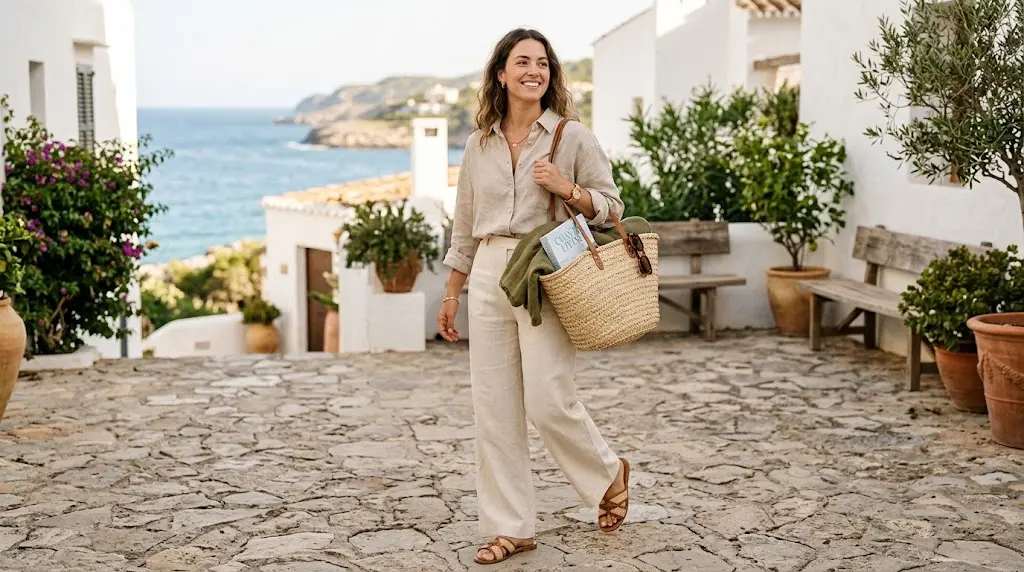
Style Tip Choose a linen blend with a touch of cotton or elastane if you want fewer wrinkles without losing the breathable feel. Pure linen wrinkles fastest; blends hold their shape a little longer through a full day.
Common Linen Styling Mistakes
- Ironing linen bone dry, which makes wrinkles harder to smooth out (iron it slightly damp instead)
- Sizing down because it feels stiff off the rack, when linen actually softens with wear
- Pairing stiff, boxy linen with heavy, structured accessories that overwhelm the silhouette
- Washing in hot water repeatedly, which weakens the fibers faster than a cool wash
Budget option: Linen-cotton blends from mainstream stores offer the look for less, though they wrinkle and soften a bit differently than pure linen. Premium option: European flax linen, often sold as Belgian or Irish linen, costs more. It drapes better and lasts for years with the right care.
Getting to Know Cotton: The Reliable All-Rounder
What Cotton Is and Why It’s a Summer Staple
Cotton comes from the soft, fluffy boll of the cotton plant. Its fibers are shorter and finer than linen’s, which gives cotton fabric a smoother, more familiar feel straight out of the wash.
Cotton absorbs moisture well and feels soft from the first wear, with no breaking-in period. That’s why it’s the fabric most people reach for without even thinking about it.
Who Cotton Suits Best
Cotton is the better pick if you:
- Want a soft, low-maintenance fabric that needs no special care
- Prefer a smoother, more polished look than raw linen offers
- Are building everyday basics, from t-shirts to layering pieces
- Need a work wardrobe that reads professional without feeling stiff
Cotton isn’t the coolest option in extreme heat. It soaks up sweat but holds onto it longer than linen, so it can feel damp on very hot or humid days. If you overheat easily, pick linen or a light linen-cotton blend instead.
Styling Cotton for Summer
Try these combinations to get more mileage from cotton pieces:
- A crisp cotton poplin shirt, tailored shorts, and loafers for a smart-casual look, drawing on the same sharp lines covered in how to choose the best loafers
- A plain cotton tee tucked into wide-leg denim, an easy pairing detailed further in how to style wide-leg jeans
- A cotton sundress with canvas sneakers for errands, swapped for espadrilles come evening
- A cotton button-down worn open over a swimsuit at the pool or beach
Crisp white, gingham, soft pastels, and classic stripes all read as summery in cotton. Pair it with canvas sneakers, loafers, or slide sandals. Keep accessories simple, like a canvas tote and thin jewelry, to match cotton’s relaxed, no-fuss style.
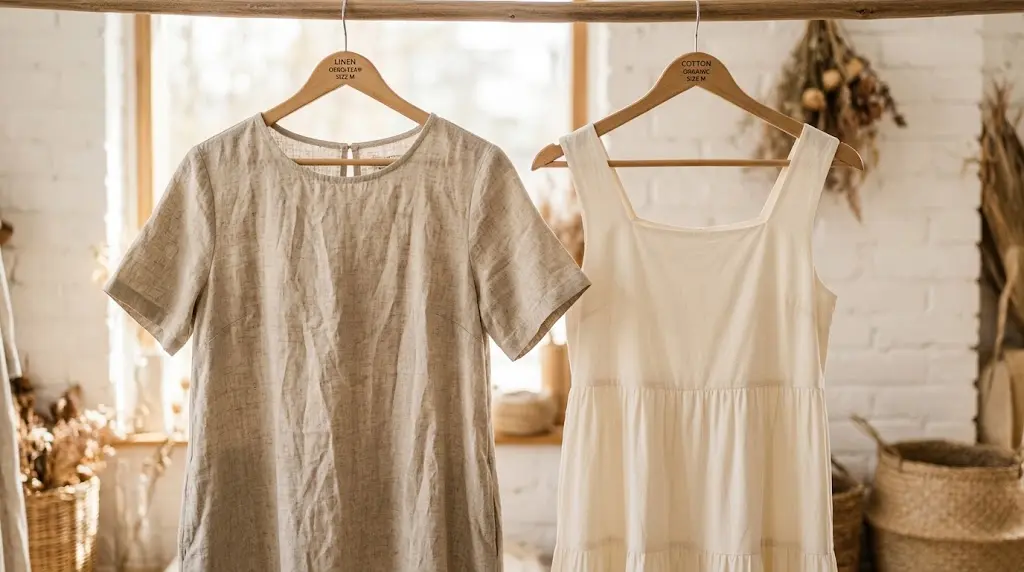
Style Tip Look for combed or pima cotton if you want softness with a smoother finish that resists pilling. It costs a little more upfront but holds its shape through many more washes.
Common Cotton Styling Mistakes
- Buying cotton too tight, since it doesn’t have linen’s airy drape and needs a bit of room to stay breathable
- Skipping a slip under thin cotton dresses, which can turn sheer in direct sunlight
- Over-drying cotton on high heat, which shrinks it and roughens the fibers over time
- Ignoring fabric weight, since lightweight cotton lawn and heavier cotton twill are built for different occasions
Budget option: Basic cotton tees and jersey pieces from mass retailers cover everyday essentials affordably. Premium option: Egyptian or pima cotton shirting offers a noticeably smoother hand and holds its shape wash after wash.
Linen vs Cotton: Side-by-Side Comparison
| Factor | Linen | Cotton |
|---|---|---|
| Breathability | Very high; hollow fibers move air fast | High, but holds moisture longer |
| Wrinkling | Wrinkles quickly, even from sitting | Wrinkles less and holds its shape longer |
| Texture | Crisp, slightly nubby | Soft and smooth |
| Durability | Very strong; softens and improves with wash | Strong, though heat-drying wears it down faster |
| Best for | Hot, humid climates and relaxed looks | Everyday wear and polished basics |
| Care | Cool wash, iron while damp, air dry | Machine wash, tumble dry on low heat |
| Price range | Mid to high for genuine linen | Wide range, from budget to premium |
Which Fabric Fits the Occasion?
| Occasion | Better Choice | Why |
|---|---|---|
| Beach vacation | Linen | Dries fast and breathes well in humidity |
| Office | Cotton (poplin or twill) | Holds its shape and looks neater by afternoon |
| Wedding guest | Linen blend | Elegant drape without overheating |
| Weekend errands | Cotton | Low maintenance and easy to care for |
| Humid, tropical trip | Linen | Superior airflow and quick drying |
| Dry desert heat | Either | Cotton feels softer against dry skin; linen still cools well |
How to Decide Based on Your Climate and Lifestyle
If You Sweat Easily or Travel Somewhere Humid
Linen is the stronger choice here. Its open weave and fast drying time keep you cooler through sticky afternoons than cotton can.
If You Need Low-Maintenance, Everyday Basics
Cotton wins for daily wear. It needs less special care and wrinkles less between washes. It also suits more casual and semi-formal settings without extra effort.
If Your Budget Is Tight
Good linen often costs more than cotton. A smart approach: invest in a few linen statement pieces, like a shirt or a dress. Then fill the rest of your closet with affordable cotton basics.
Building a Summer Capsule With Both Fabrics
You don’t have to pick a side. Most stylish summer wardrobes lean on cotton for the basics. They save linen for pieces with more visual interest. If you want more help narrowing down your closet, our complete guide to creating a capsule wardrobe walks through it step by step.
A simple ten-piece starting point:
- White cotton t-shirt
- Linen button-down shirt in a neutral tone
- Cotton or cotton-blend wide-leg trousers
- Linen shorts
- Cotton sundress
- Lightweight linen blazer for evenings
- Two cotton tank tops
- Linen or cotton midi skirt
- A light cotton cardigan for over-air-conditioned spaces
- Woven sandals and canvas sneakers
For more everyday combinations to build around these pieces, our list of stylish outfit ideas for everyday wear is a useful next stop.
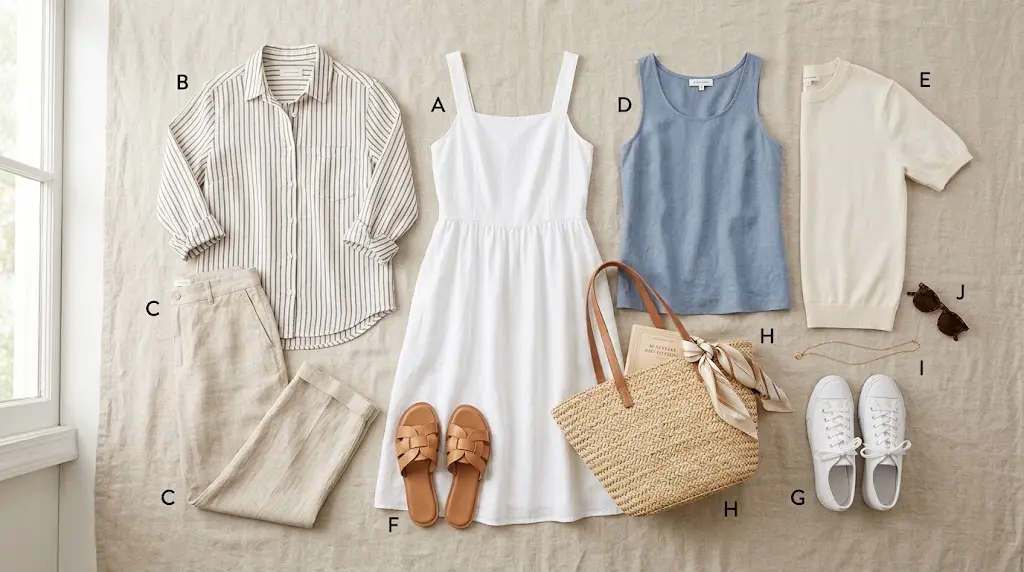
Style Tip Build your capsule around one neutral palette, then add two accent colors. It’s the fastest way to make ten pieces feel like thirty different outfits.
Caring for Linen and Cotton So They Last All Season
Both fabrics reward a little patience in the laundry room. Wash linen and cotton in cool or lukewarm water to protect the natural fibers and keep colors from fading. Skip high heat in the dryer, since it’s the fastest way to shrink cotton and roughen linen over time.
Iron linen while it’s still slightly damp for the smoothest finish. Cotton irons well when fully dry. A quick steam also works if you’re short on time. Store both fabrics folded rather than hung when you can. Heavy, damp linen can stretch out of shape on a hanger.
A Quick Note on Sustainable Choices
If eco-friendly shopping matters to you, both fabrics can be a smart pick when sourced well. Flax needs less water and fewer chemical sprays than regular cotton. Most flax fields rely on rain alone.
Cotton’s impact varies more, since it depends on how and where it’s grown. Organic and rain-fed cotton often uses less water and fewer chemicals than regular cotton. Still, not every claim in this space holds up. It’s worth checking for a trusted label, like the Global Organic Textile Standard, before you trust a green claim.
Fashion writers have also noticed brands moving back toward natural fibers. Harper’s Bazaar covers this shift in its roundup of sustainable labels that use linen and organic cotton.
Frequently Asked Questions
Can I wear linen and cotton together in one outfit? Yes, and it’s an easy way to mix texture. Try a cotton t-shirt under a linen blazer, or linen shorts with a cotton tank. You still get airflow, and the outfit feels less flat.
Which fabric is better for hot, humid weather? Linen does better in humid weather. Its hollow fibers move air faster and dry quicker than cotton, so it feels less damp against the skin on sticky days.
Does linen shrink in the wash? It can shrink a little, especially in the first few washes. Wash it in cool water, then air-dry it or use low heat. This keeps shrinking to a minimum.
Is cotton or linen better for sensitive skin? Both are gentle, natural fabrics. Linen has a slight edge, though. It’s less likely to irritate skin and it resists odor better in hot, sweaty weather.
How do I stop linen from wrinkling so fast? You can’t stop it fully, since wrinkling is part of linen’s charm. A linen blend helps. So does ironing it while damp and hanging it up right after wear.
Which fabric is more budget-friendly overall? Cotton tends to offer more budget picks overall, from basic tees to dresses. Good linen costs more, so many closets use cotton for daily pieces and save linen for a few key items.
The Takeaway
Linen and cotton solve different problems, which is exactly why your closet has room for both. Reach for linen when the day calls for maximum airflow and you don’t mind a few creases. Reach for cotton when you want something soft, dependable, and ready to wear straight from the drawer.
The real trick is matching the fabric to your actual days, not just the season’s trend. Once you know how your body handles heat, and how much ironing you’re willing to do, summer dressing gets a lot easier.











3 Responses
Утепление выполняет важнейшую функцию в удержании комфортной температуры внутри здания.
Качественная изоляция помогает заметно сократить затраты на обогрев и кондиционирование помещений.
https://class-m.ru/article/2052-ekologicheskie-preimushchestva-bazaltovoy-izolyatsii-v-stroitelstve.html
Кроме того, утепление защищает от образование конденсата, плесени и разрушения конструкций.
В итоге, качественная изоляция создаёт энергоэффективность и уютный микроклимат в доме.
Теплоизоляция выполняет важнейшую задачу в поддержании комфортной температуры внутри помещения.
Эффективная изоляция даёт возможность значительно сократить затраты на отопление и охлаждение помещений.
https://nnapt.ru/constrution/103-tekhnologii-germetizatsii-kabelnykh-soedineniy-s-ispolzovaniem-kauchuka/
Более того, изоляция предотвращает образование сырости, грибка и разрушения конструкций.
В итоге, правильная изоляция обеспечивает экономию ресурсов и уютный климат в доме.
Термоизоляция играет критическую задачу в поддержании тепла внутри дома.
Надёжная теплоизоляция позволяет заметно сократить расходы на обогрев и охлаждение зданий.
https://uipnz.ru/article/1960.html
Помимо этого, утепление предотвращает возникновение конденсата, плесени и промерзания стен.
В итоге, правильная изоляция обеспечивает экономию ресурсов и уютный климат в здании.