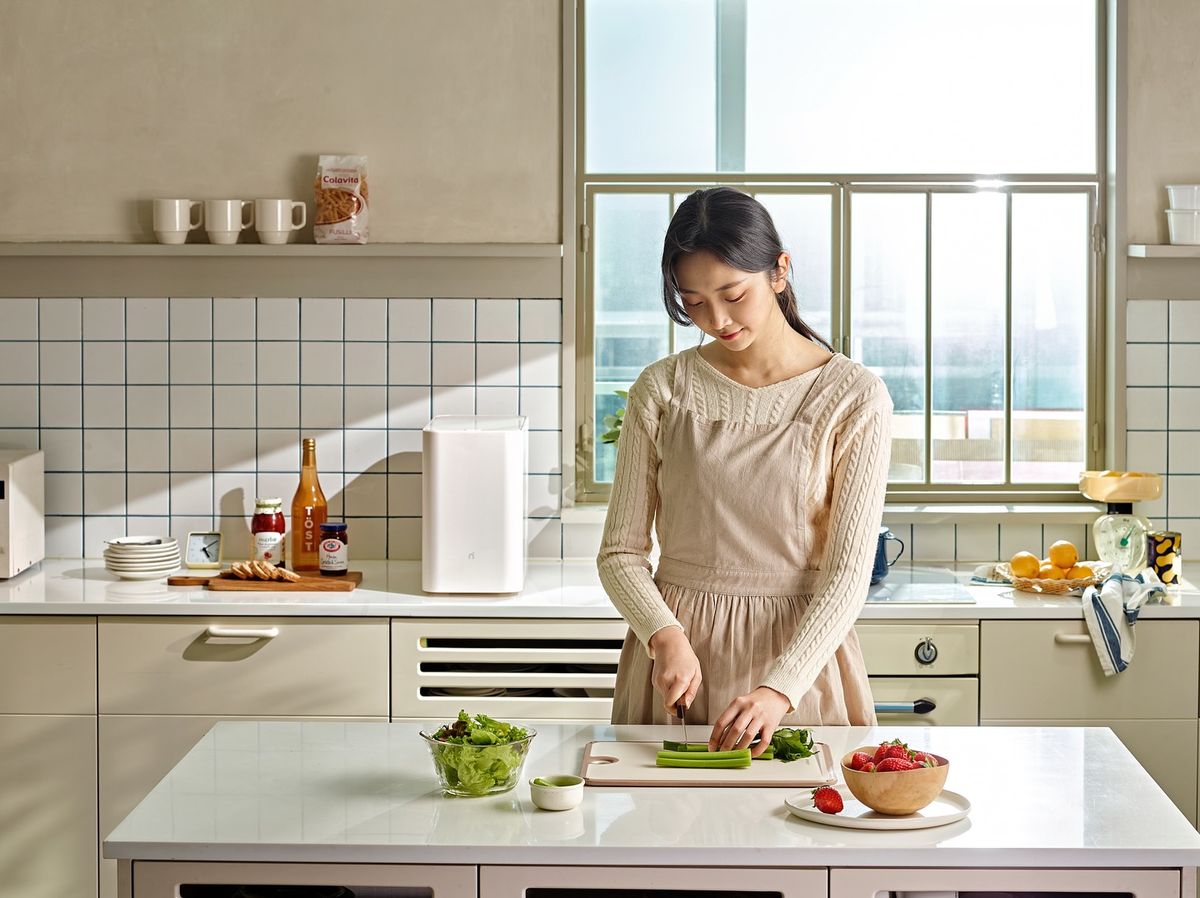
walking into client kitchens with eight square feet of counter and a pantry the size of a coat closet, I’ve learned which storage upgrades earn that markup and which ones are mostly there for the flat-lay photo.
So let’s actually look at it.
1. What Clear Containers Are Solving For
In a small kitchen, the real enemy isn’t lack of square footage. It’s lack of legibility. You stack three half-used bags of pasta behind a box of oatmeal, and within a week you genuinely cannot remember what’s back there without pulling everything out. Clear containers fix that one specific problem: you can see what you have, at a glance, without unstacking a single thing.
There’s a second benefit that gets less attention, and it’s the one I actually care about as a designer. Uniform containers let you stack to the exact height of a shelf instead of the random height of whatever bag or box a product happened to ship in. That reclaimed inch or two of dead air above your cereal box adds up fast in a kitchen where cabinet space runs out faster than most people expect.
2. Glass or Plastic? A Straight Comparison
Clients ask me this constantly, and the honest answer is “it depends on what’s going in it,” not “glass is always better.”
| Glass | Plastic (BPA-free) | |
|---|---|---|
| Weight on shelves | Heavy, can strain wall-mounted or cheap shelving | Light, easier on weak cabinet brackets |
| Breakage risk | Real, especially in apartments with hardwood floors | Low |
| Stain and odor retention | Minimal | Plastic absorbs tomato sauce, turmeric, curry over time |
| Microwave and freezer use | Generally safe | Varies by product, check labeling |
| Price per unit | Higher | Lower |
| Best for | Flour, sugar, rice, dry goods you reach for daily | Snacks, cereal, anything kids handle |
Here’s where people usually go wrong: they buy a full glass set for a tiny upper cabinet, then wonder why the shelf is bowing six months later. Glass is gorgeous and it is also dense. If you’re working with the kind of flimsy particleboard shelving that comes in a lot of rental units, plastic is the more honest choice even if it photographs less well.
3. When a Container Set Doesn’t Actually Fix Anything
I’ve watched plenty of people buy a $300 matching container system, dump it into a cabinet that has no real organizing logic, and end up just as frustrated three weeks later. The containers didn’t fail. The system underneath them never existed in the first place.
Before you buy anything, you need an actual plan for the cabinet itself, not just for what goes inside the jars. That usually means deciding which items live at eye level, which go up high, and whether you need risers or a tiered system to use the vertical space you’ve got. If you haven’t sorted that out yet, it’s worth reading through Shelf Risers vs Drawer Organizers: Which Helps More before you spend a dime on containers. And if your kitchen doesn’t have a real pantry at all, the container question is secondary to a bigger one, which I cover in Small Kitchen Has No Pantry: Now What.
4. How I Actually Spec These for Clients
I don’t decant everything. That’s a common misconception, that the goal is to empty every box and bag into matching jars. It isn’t. I decant five categories, consistently, across almost every small-kitchen project: flour, sugar, rice, pasta, and cereal. Those are the items people reach for daily, the ones where seeing the quantity left actually changes behavior, like whether you remember to add rice to the grocery list before you’re down to a half cup.
Everything else, I leave more flexible. Snack bags, spice packets, baking mixes you use twice a year, these don’t need the premium treatment. If anything, over-containerizing a small kitchen makes it feel more cluttered, not less, because you’re adding a layer of glass and lids on top of items that were already compact in their own packaging.
One practical note before you buy: measure your actual shelf height first, not the height you assume it is. I’ve had clients order a beautiful modular set only to discover the tallest jar doesn’t clear the shelf above it by a quarter inch. Bring a tape measure to the store, or measure first and shop with the number in your notes app.
5. The Cost-Versus-Value Verdict
For dry goods you cycle through weekly, yes, clear containers are worth the cost, even the premium glass ones, because the visibility genuinely changes how you shop and cook. For everything else, you’re paying for aesthetics, which is a perfectly fine reason to buy something, just don’t confuse it with a functional upgrade.
If your actual bottleneck is spices rather than pantry staples, the container question looks different again. That’s its own conversation, and I’ve laid out a cheaper, faster approach in How to Organize Spices Without a Spice Rack.
I’ll also say this, because I see it constantly on social media: a beautifully containerized pantry that gets photographed once and never refilled correctly isn’t a functional system. It’s a prop. The real test is whether you can refill it at 9pm after a long day without thinking about it. If the system requires too much maintenance, it doesn’t matter how good it looks on day one.
That’s usually where I leave clients. Buy containers for the five or six things you actually run out of, skip them for the rest, and put the savings toward shelving that actually fits your cabinet.
FAQs
Do clear containers actually save space, or do they just make things look organized? Mostly the second, with a side benefit of the first. The real space savings come from stacking to a uniform height, not from the material being clear. The visibility is a separate, genuine benefit, just not a spatial one.
Is glass or plastic better for a small apartment kitchen? Plastic if your shelving is weak or you’re worried about breakage on hard floors. Glass if you’re storing items long-term and want zero odor or staining over time. Most kitchens benefit from a mix rather than committing fully to one material.
What size containers should I buy first? Start with whatever holds a standard 2 to 5 pound bag of your most-used staple, usually flour, sugar, or rice. Buy two or three of that size before expanding into specialty shapes for pasta or cereal.
I rent and can’t install permanent shelving. Are containers still worth it? Yes, this is actually where they earn their keep most, since you can’t always change the cabinet itself but you can always change what’s inside it. Stick to freestanding sets rather than anything that requires mounting.
How do I decide what to decant versus what to leave in its packaging? Decant anything you buy in bulk and reach for multiple times a week. Leave single-use packets, rarely-used baking items, and anything already in a resealable bag exactly as it is.
If you’re still figuring out where containers fit into a bigger reorganization, Small Kitchen Storage Ideas Worth Testing in 2026 is a reasonable next read.
Leave a Reply